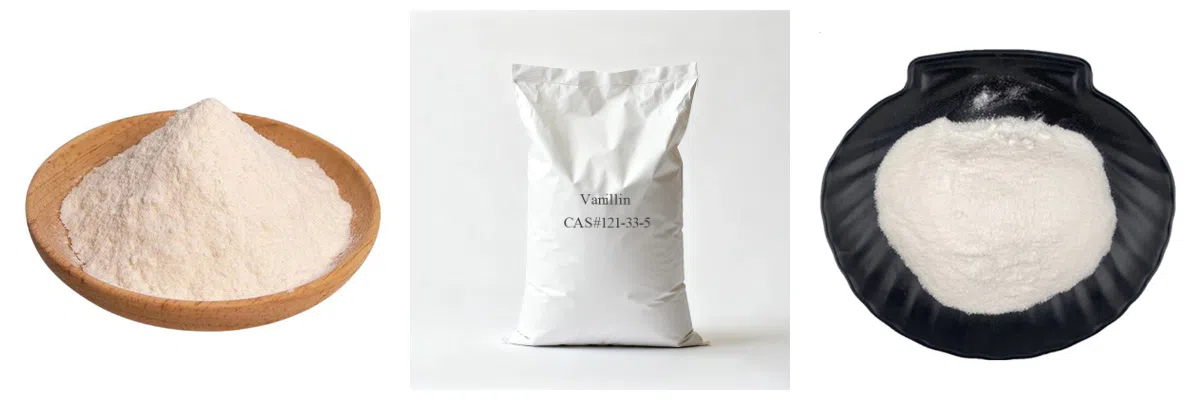
Products Description of Vanillin CAS#121-33-5
Vanillin is a naturally occurring aromatic compound found widely in various plants and botanical sources, including the tubers of Rhizoma Gastrodiae (Tian Ma), the whole herb of Equisetum (Mu Zei), Ulva pertusa (Kong Shi Chun), sugar beets, vanilla beans, Peru balsam, and other natural materials.
Chemical Properties
| Melting point | 81-83 °C(lit.) |
| Boiling point | 170 °C15 mm Hg(lit.) |
| bulk density | 600kg/m3 |
| density | 1.06 |
| vapor density | 5.3 (vs air) |
| vapor pressure | >0.01 mm Hg ( 25 °C) |
| refractive index | 1.4850 (estimate) |
| FEMA | 3107 | VANILLIN |
| Fp | 147 °C |
| storage temp. | 2-8°C |
| solubility | methanol: 0.1 g/mL, clear |
| pka | pKa 7.396±0.004(H2O I = 0.00 t = 25.0±1.0) (Reliable) |
| form | Crystalline Powder |
| color | White to pale yellow |
| Odor | at 100.00 %. vanilla |
| PH | 4.3 (10g/l, H2O, 20℃) |
| biological source | synthetic |
| Odor Type | vanilla |
| Water Solubility | 10 g/L (25 ºC) |
| Sensitive | Air & Light Sensitive |
| Merck | 149932 |
| JECFA Number | 889 |
| BRN | 472792 |
| Stability: | Stable. May discolour on exposure to light. Moisture-sensitive. Incompatible with strong oxidizing agents, perchloric acid. |
| Cosmetics Ingredients Functions | FRAGRANCE |
| LogP | 1.17 at 25℃ |
| CAS DataBase Reference | 121-33-5(CAS DataBase Reference) |
| NIST Chemistry Reference | Benzaldehyde, 4-hydroxy-3-methoxy-(121-33-5) |
| EPA Substance Registry System | Vanillin (121-33-5) |
| Hazard Codes | Xi |
| Risk Statements | 22-36/37/38-36 |
| Safety Statements | 26 |
| WGK Germany | 1 |
| RTECS | YW5775000 |
| Autoignition Temperature | >400 °C |
| TSCA | Yes |
| HS Code | 29124100 |
| Hazardous Substances Data | 121-33-5(Hazardous Substances Data) |
| Toxicity | LD50 orally in rats, guinea pigs: 1580, 1400 mg/kg (Jenner) |
Product Application of Vanillin CAS#121-33-5
Vanillin is a widely used flavoring agent that can be derived from synthetic sources or artificial vanilla sources. It can be obtained from lignin found in sulfite waste liquor, a byproduct of the pulp industry, or synthesized from raw materials such as guaiacol and eugenol. Ethyl vanillin is a related compound with an aroma intensity approximately three and a half times that of vanillin.
Vanillin is also recognized as the primary aroma component of natural vanilla and can be obtained by extraction from vanilla beans. It is frequently used as a substitute for vanilla extract in a wide range of food products, including ice cream, desserts, baked goods, and beverages, typically at concentrations ranging from 60 to 220 ppm.
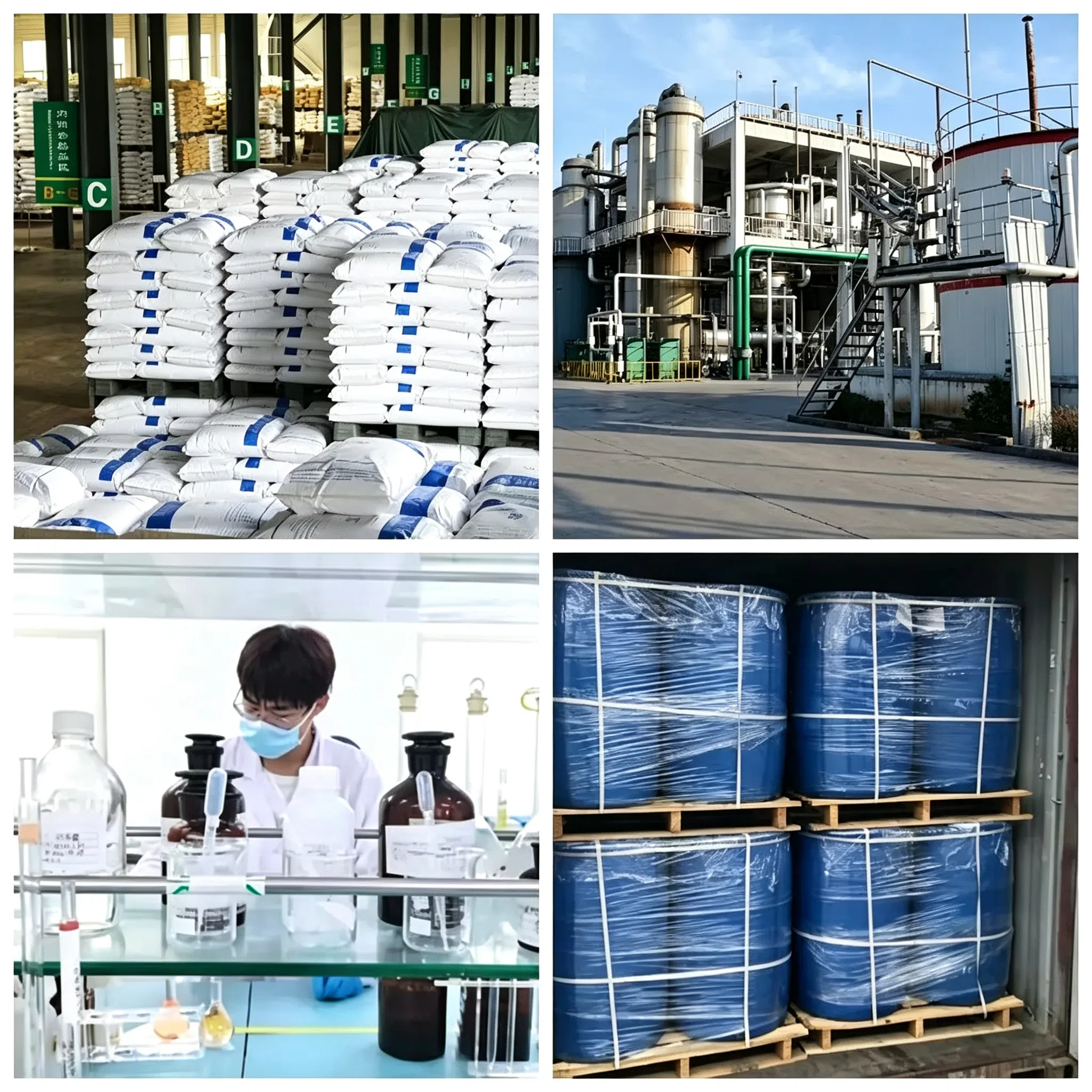
Factory and Equipment Show