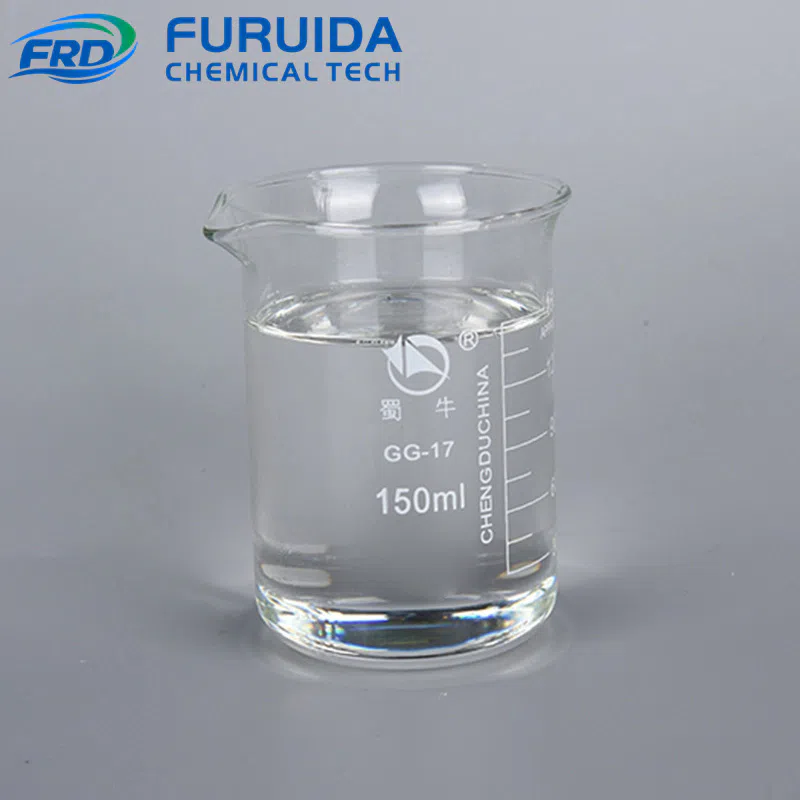
Product Description of Phosphoric Acid CAS#7664-38-2
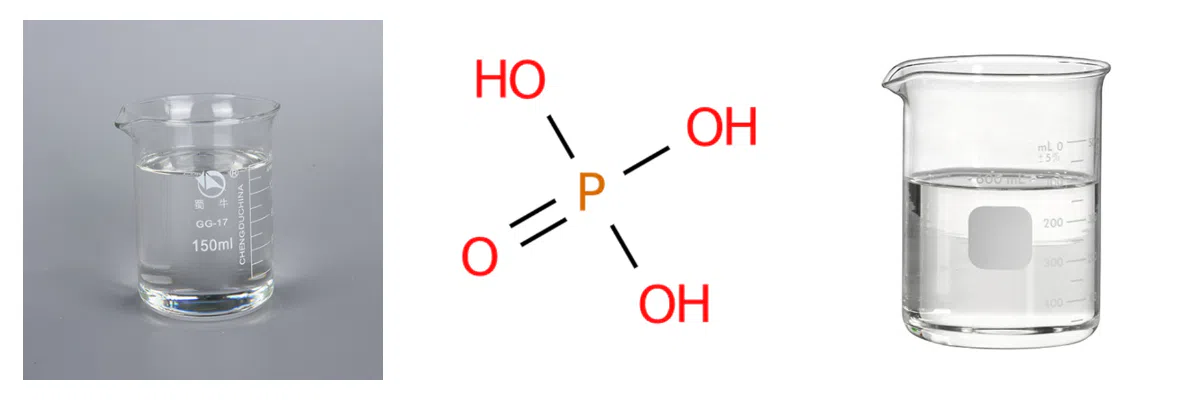
Phosphoric acid, also known as orthophosphoric acid, has the molecular formula H₃PO₄. In its pure form, it is a colorless, transparent, viscous liquid or an odorless orthorhombic crystals with a strong acidic taste. An 85% phosphoric acid solution appears as a colorless to slightly tinted, thick liquid. It has a melting point of 42.35°C, a specific gravity of 1.70, and a high boiling point. It is completely miscible with water; at its boiling point of 213°C, it loses half its water content to form pyrophosphoric acid, and upon heating to 300°C, it converts into metaphosphoric acid. It has a relative density of approximately 1.834 and is readily soluble in water and ethanol.
Phosphoric acid is a common medium-strength inorganic acid. Its acidity is weaker than that of strong acids such as sulfuric, hydrochloric, and nitric acids, but stronger than that of weak acids like acetic, boric, and carbonic acids. It reacts with sodium carbonate at varying pH levels to form various acid salts. Phosphoric acid irritates the skin, causes inflammation, and damages body tissue; when heated, concentrated phosphoric acid can be corrosive to porcelain. It is hygroscopic and should be stored in tightly sealed containers. Commercially available phosphoric acid is typically a viscous, concentrated solution containing approximately 82% H₃PO₄; its high viscosity is primarily attributed to hydrogen bonding within the solution.
Chemical Properties
| Melting point | ~40 °C(lit.) |
| Boiling point | 158 °C(lit.) |
| density | 1.685 g/mL at 25 °C(lit.) |
| vapor density | 3.4 (vs air) |
| vapor pressure | 2.2 mm Hg ( 20 °C) |
| refractive index | n20/D 1.433 |
| FEMA | 2900 | PHOSPHORIC ACID |
| storage temp. | no restrictions. |
| solubility | H2O: soluble |
| pka | 2.1-7.2-12.3(at 25℃) |
| form | Solid or Viscous Liquid |
| Specific Gravity | 1.7 |
| color | ≤10(APHA) |
| PH | 3.06(1 mM solution);2.26(10 mM solution);1.63(100 mM solution); |
| Odor | Odorless |
| PH Range | 1.5 |
| Water Solubility | MISCIBLE |
| λmax | λ: 260 nm Amax: ≤0.05 λ: 280 nm Amax: ≤0.04 |
| Merck | 14,7344 |
| BRN | 1921286 |
| Exposure limits | TLV-TWA 1 mg/m3 (ACGIH, MSHA, and OSHA); TLV-STEL 3 mg/m3 (ACGIH). |
| Dielectric constant | 61.0 |
| InChIKey | NBIIXXVUZAFLBC-UHFFFAOYSA-N |
| LogP | -2.15 |
| CAS DataBase Reference | 7664-38-2(CAS DataBase Reference) |
| NIST Chemistry Reference | Phosphoric acid(7664-38-2) |
| EPA Substance Registry System | Phosphoric acid (7664-38-2) |
Safety Information
| Hazard Codes | C,Xn,T,F |
| Risk Statements | 34-35-22-39/23/24/25-36/38-23/24/25-11 |
| Safety Statements | 7-16-26-36/37-45-36/37/39-1/2-24/25 |
| RIDADR | UN 3453 8/PG 3 |
| WGK Germany | 3 |
| RTECS | TB6300000 |
| F | 3-10 |
| TSCA | Yes |
| HS Code | 2809 20 00 |
| HazardClass | 8 |
| PackingGroup | III |
| Hazardous Substances Data | 7664-38-2(Hazardous Substances Data) |
| IDLA | 1,000 mg/m3 |
Product Application of Phosphoric Acid CAS#7664-38-2
Wet-process phosphoric acid is primarily used in the production of various phosphates, including ammonium phosphate, potassium dihydrogen phosphate, disodium hydrogen phosphate, trisodium phosphate, and condensed phosphates. Purified phosphoric acid is utilized in the manufacture of calcium hydrogen phosphate for animal feed.
It is widely used for metal surface phosphating and in the formulation of electrolytic and chemical polishing solutions for aluminum products. In the pharmaceutical industry, it serves as a raw material for producing compounds such as sodium glycerophosphate and iron phosphate, and is also used in the manufacture of zinc phosphate for dental cement.
Phosphoric acid acts as a catalyst in the condensation reactions of phenolic resin and as a drying agent in the production of dyes and chemical intermediates. In the printing industry, it is used to formulate cleaning solutions for removing stains from offset printing plates and in the preparation of matchstick impregnation solutions.
In metallurgy, phosphoric acid is used to produce phosphate refractory mortars, which extend the service life of steelmaking furnaces. Additionally, it serves as a coagulant for rubber latex, a raw material for inorganic adhesives, and an anti-corrosion component in metal protective coatings.
Factory and Equipment Show