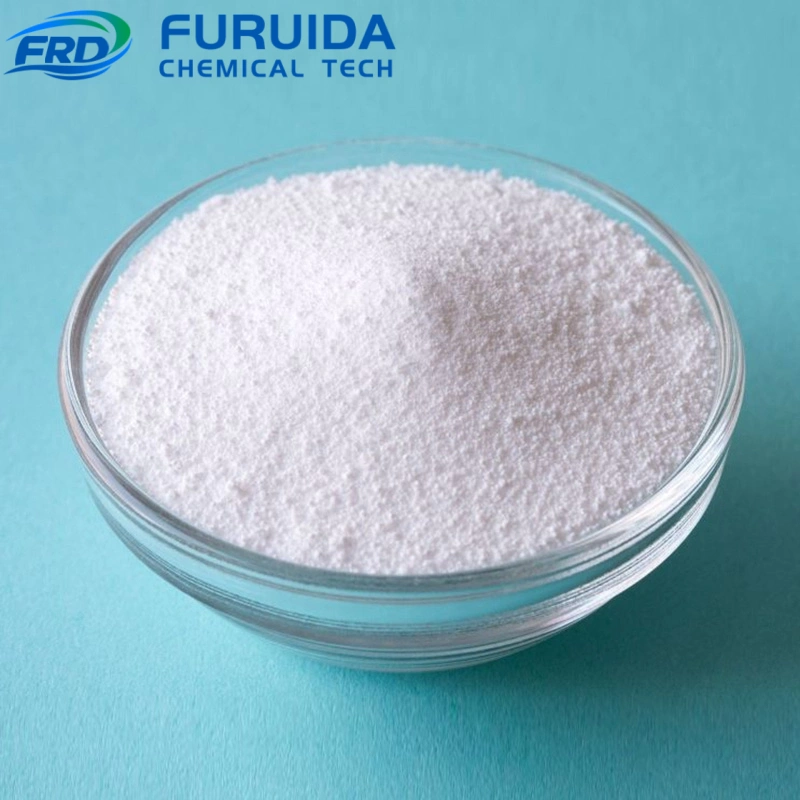
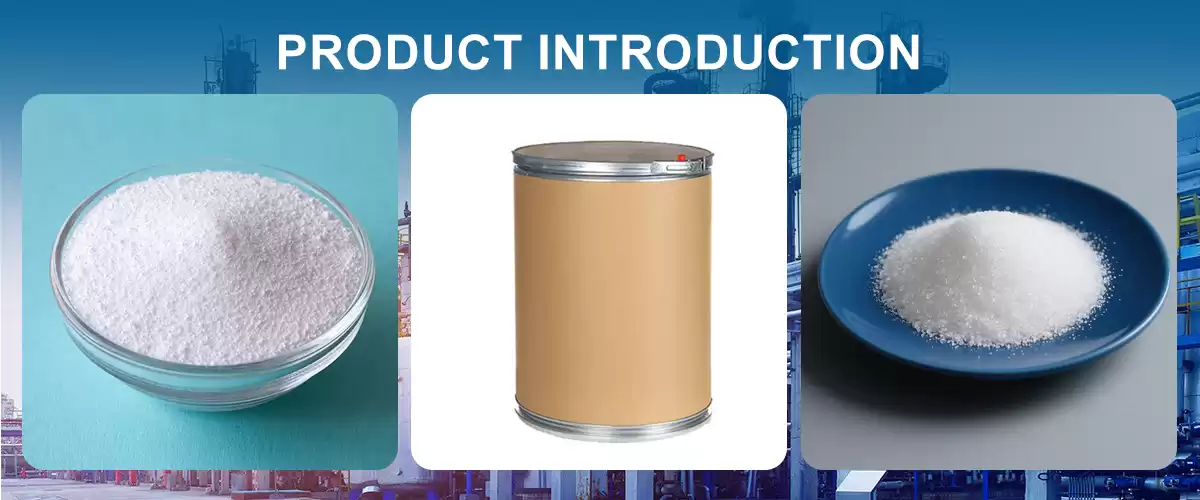
Products Description of Choline Chloride CAS#67-48-1
Choline chloride was developed by the Agricultural Technology Institute of Japan's Ministry of Agriculture, Forestry and Fisheries in 1964 and was registered as a plant growth regulator in 1987. It has also been referred to as vitamin B4. Commercially available choline chloride products are generally classified into plant-carrier choline chloride and formulations that use white carbon black (silicon dioxide) as a carrier. China's production capacity is approximately 400,000 tons, accounting for more than 50% of the global production capacity.
Choline chloride is not the same as choline itself; rather, it is a salt composed of the choline cation (CA⁺) and the chloride anion (Cl⁻). Choline itself is an organic base consisting of a choline cation (CA⁺) and a hydroxyl group (OH), and it occurs naturally in many plants. In simple terms, 1.15 g of choline chloride is equivalent to 1 g of choline. In Japan, choline chloride has been registered for use as a sweet potato rooting agent and tuber enlargement agent, and it is widely used in fruit crop cultivation.
Choline chloride Chemical Properties
| Melting point | 302-305 °C (dec.) (lit.) |
| density | 1.0238 (rough estimate) |
| refractive index | 1.5400 (estimate) |
| FEMA | 4500 | Choline chloride (Also Includes Choline) |
| storage temp. | Sealed in dry,Room Temperature |
| solubility | H2O: 1 M, clear, colorless |
| form | Adhering Crystals |
| color | White |
| Odor | sl. odor of trimethylamine |
| PH | 5.0-7.5 (25℃, 1M in H2O) |
| Water Solubility | soluble |
| Sensitive | Hygroscopic |
| λmax | λ: 260 nm Amax: 0.015 |
| λ: 280 nm Amax: 0.010 | |
| JECFA Number | 2003 |
| Merck | 142206 |
| BRN | 3563126 |
| Stability: | Stable. Incompatible with strong oxidizing agents, moisture. Store under a dry atmosphere. |
| InChIKey | SGMZJAMFUVOLNK-UHFFFAOYSA-M |
| LogP | -3.7 |
| CAS DataBase Reference | 67-48-1(CAS DataBase Reference) |
| NIST Chemistry Reference | Choline chloride(67-48-1) |
| EPA Substance Registry System | Choline chloride (67-48-1) |
| Hazard Codes | Xi |
| Risk Statements | 36/37/38 |
| Safety Statements | 26-36 |
| WGK Germany | 1 |
| RTECS | KH2975000 |
| F | 46090 |
| TSCA | Yes |
| Hazardous Substances Data | 67-48-1(Hazardous Substances Data) LD50 in rats (g/kg): 0.400 i.p.; 6.64 orally (Hartung, Cornish) |
| Toxicity |
Product Application of Choline Chloride CAS#67-48-1
Choline chloride is used as a nutritional additive and a plant photosynthesis promoter that can help increase crop yields. It is applied to a wide range of crops, including corn, sugarcane, sweet potatoes, potatoes, radishes, onions, cotton, tobacco, vegetables, grapes, and mangoes.
Choline chloride is also used in the treatment of fatty liver and cirrhosis. In animal nutrition, it serves as a feed additive for poultry, livestock, and fish, helping stimulate ovarian activity, increase egg production, improve piglet production, and promote weight gain in poultry, livestock, and fish.
As the hydrochloride salt of choline, choline chloride is an effective nutritional supplement and lipotropic agent. It supports fat metabolism and helps prevent fat accumulation in the liver. As a vitamin product, it is widely used in pharmaceuticals, health products, and nutritional food formulations. Choline chloride is also popular among domestic users as a food additive because of its high choline content (85%) and relatively low cost.