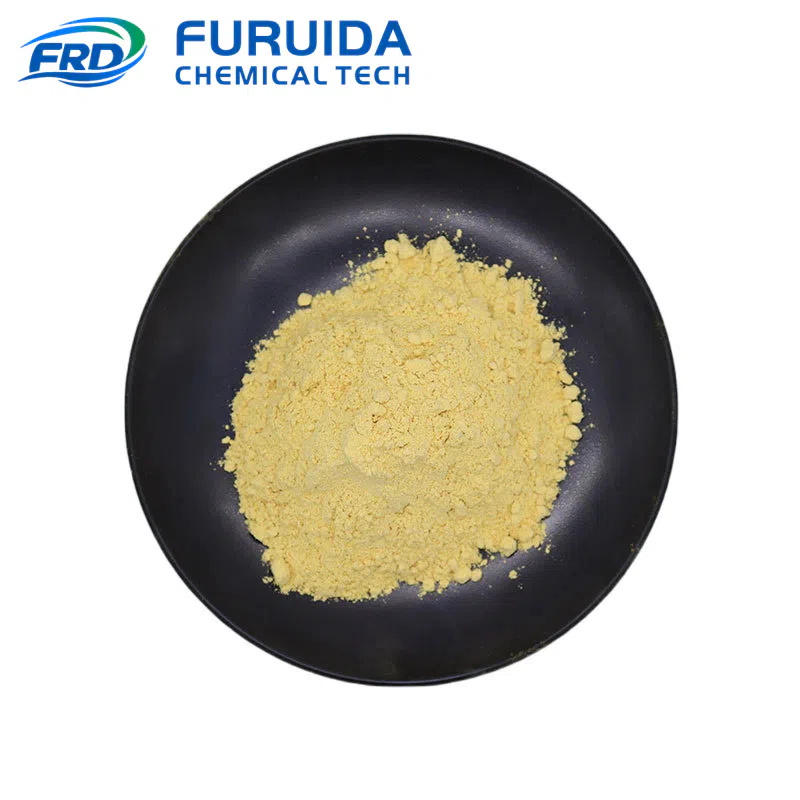
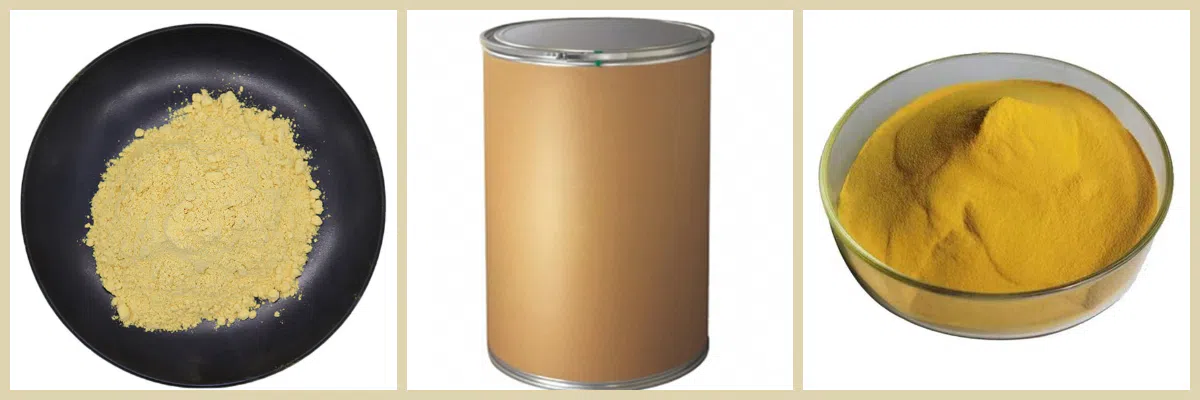
Vitamin A CAS#11103-57-4
Vitamin A, chemically known as retinol, was the first vitamin to be discovered and is an essential nutrient with significant biological functions. It primarily exists in two forms: retinol, the active form of vitamin A, found exclusively in animal-derived foods, and carotenoids, such as β-carotene.
Vitamin A is an unsaturated monohydric alcohol containing an ester ring. It encompasses two closely related forms, vitamin A₁ and vitamin A₂, which share similar molecular structures. Retinol can be synthesized from plant-derived β-carotene. Within the human body, β-carotene undergoes enzymatic reactions, catalyzed by the enzyme β-carotene-15,15'-dioxygenase, to produce two molecules of retinal. This retinal is subsequently reduced to retinol by the enzyme retinal reductase. Because β-carotene serves as a precursor to vitamin A, it is also referred to as a provitamin A.
Chemical Properties
| English Name | Vitamin A |
| English Synonyms | Aquasol A;ROIDEX;Vitamin A Retinol;3,7-Dimethyl-9-(2,6,6-trimethyl-1-cyclohexenyl)-nona-2,4,6,8-tetraen1-ol;Water-soluble vitamin A;VITAMIN A 500W;Vitamin A USP/EP/BP;New anti-aging products |
| CAS Number | 11103-57-4 |
| Molecular Formula | C20H300 |
| Molecular Weight | 286.46 |
| EINECS Number | 234-328-2 |
| Storage conditions | -20 ℃ |
| Solubility | All retinyl esters are practically insoluble in water, soluble or partially soluble in anhydrous ethanol, and miscible with organic solvents. Vitamin A and its esters are highly sensitive to the effects of air, oxidants, acids, light, and heat. Perform tests and examinations as soon as possible, avoiding exposure to photochemical light and air, oxidants, oxidizing catalysts (e.g., copper, iron), acids, and heat; use freshly prepared solutions. |
| Cosmetic ingredients and efficacy | Skin Care - Other |
| InChI | InChI=1S/C20H300/c1-16(8-6-9-17(2)13-15-21)11-12-19-18(3)10-7-14-20(19,4)5/h6,8-9,11-13,21H,7,10,1 4-15H2,1-5H3/b9-6+,12-11+,16-8+,17-13+ |
| InChIKey | FPIPGXGPPPQFEQ-OVSJKPMPSA-N |
| SMILES | C1(/C=C/C/C)=C/C=C/C/C)=C/CO)=C(C)CCCC1(C)C |

Product Application
Vitamin A is a fat-soluble vitamin that exerts its biological activity primarily through its active metabolite, retinoic acid. Carotenes serve as an important precursor to vitamin A, with β-carotene possessing the highest biological activity. However, the efficiency with which the human gut absorbs and utilizes carotenes is only about one-sixth that of vitamin A itself.
Vitamin A is stored primarily in the liver, which holds approximately 90% to 95% of the body's total reserves; a smaller portion is stored in adipose (fat) tissue. As an essential nutrient involved in various metabolic processes, vitamin A plays a crucial role in maintaining normal physiological functions. Insufficient dietary intake of vitamin A, inadequate consumption of dietary fat, or long-term digestive disorders can lead to a vitamin A deficiency, which may disrupt various physiological processes and result in associated health problems.
Factory and Equipment Show