Shellac CAS#9000-59-3
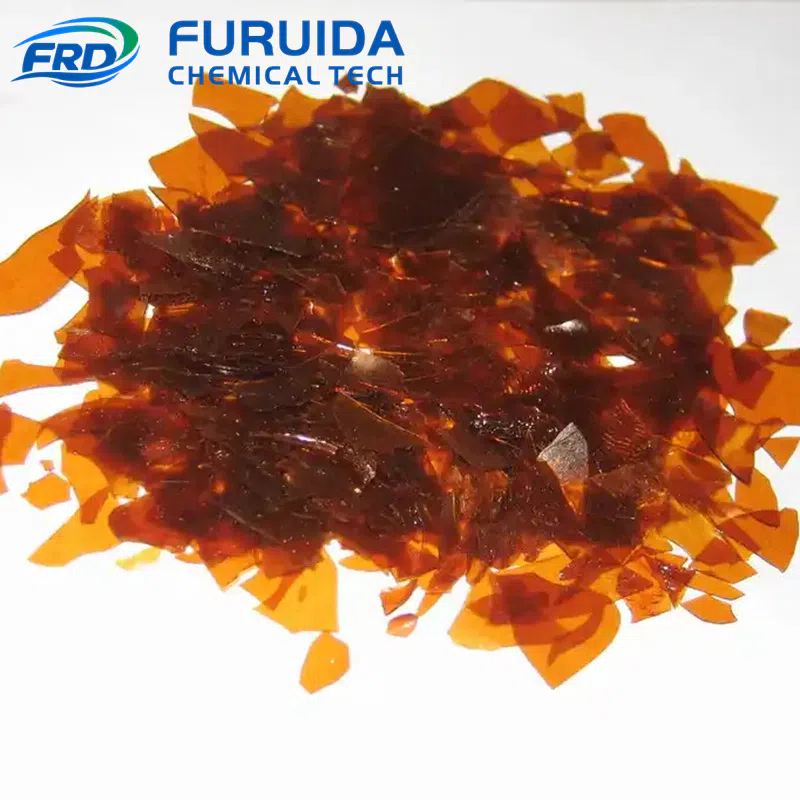
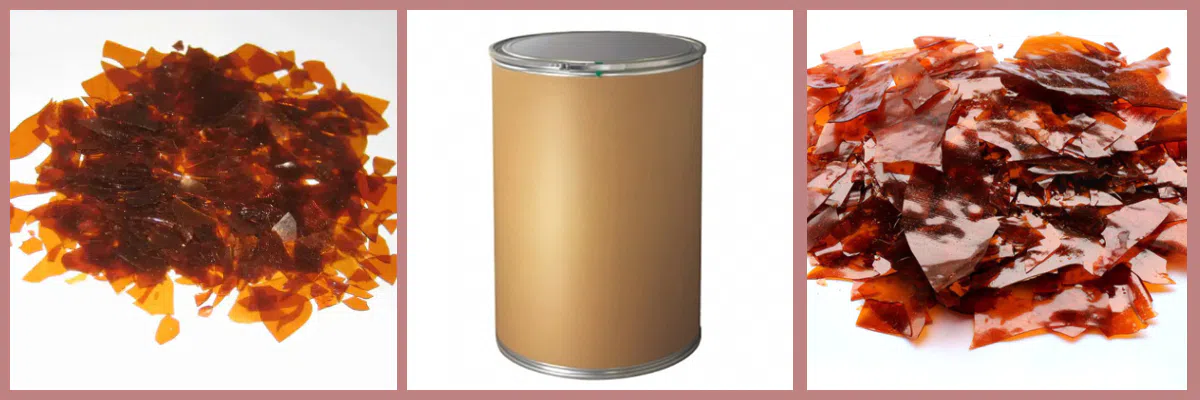
Shellac is a natural resin available in colors ranging from pale yellow to dark red. Depending on the refining process, it is typically supplied in the form of hard, brittle flakes that may or may not contain wax. There are many varieties of shellac, including bleached shellac, bleached dewaxed shellac, dewaxed and decolorized shellac, dewaxed flake shellac, dewaxed orange shellac, orange shellac, purified shellac, refined shellac, standard bleached shellac, standard waxy shellac, waxy shellac, and white shellac. Shellac flakes can be crushed or ground into coarse or fine powder. Bleached shellac generally appears as a coarse, off-white powder. Shellac is tasteless and has a very faint odor; its characteristic scent arises from a complex aromatic profile.
Chemical Properties
| Melting point | 115-120° |
| density | 1.035-1.140 |
| storage temp. | 2-8°C |
| solubility | Practically insoluble in water, gives a more or less opalescent solution (wax containing shellac and bleached shellac) or a clear solution (dewaxed shellac and bleached, dewaxed shellac) in anhydrous ethanol. When warmed it is sparingly soluble or soluble in alkaline solutions. |
| Odor | mild woody |
| Dielectric constant | 2.0(Ambient) |
| Stability: | Stable. Incompatible with strong oxidizing agents. |
| Major Application | pharmaceutical |
| Cosmetics Ingredients Functions | BINDING |
| SKIN CONDITIONING - EMOLLIENT | |
| FILM FORMING | |
| VISCOSITY CONTROLLING | |
| HAIR FIXING | |
| CAS DataBase Reference | 9000-59-3 |
| EPA Substance Registry System | Shellac (9000-59-3) |
| WGK Germany | 3 |
| TSCA | TSCA listed |
| HS Code | 1301900190 |
| Storage Class | 11 - Combustible Solids |

Product Application of Shellac CAS#9000-59-3
Due to its low permeability to water vapor and oxygen, Shellac is widely used as a moisture-barrier coating for tablets and pellets. It is typically applied in the form of alcoholic or aqueous solutions, commonly referred to as pharmaceutical glazes. However, alcoholic shellac solutions suffer from stability issues, which limits their use in modified-release and enteric coatings within the pharmaceutical industry.
Shellac, particularly the newer aqueous shellac solutions, is primarily used in food products and nutritional supplements. Recent studies indicate that shellac films produced from aqueous solutions exhibit excellent performance and chemical stability. Aqueous ammonium shellac solutions based on dewaxed orange shellac do not share the stability problems associated with alcoholic shellac solutions; consequently, they can serve as enteric coatings for pellets, tablets, and both soft and hard gelatin capsules, especially in the nutritional supplement sector.
Shellac is also a key component in pharmaceutical printing inks for capsules and tablets, typically applied as a 40% w/v alcoholic solution. Additionally, it can be used to apply one or two layers of sealing coats to tablet cores, providing moisture protection prior to subsequent film or sugar coating.
Other applications include the coating or encapsulating of powders and granules, such as those used in probiotic products. Prior to the advent of film-coating technology, combinations of shellac, cetostearyl alcohol, and stearic acid were utilized for enteric coating purposes.
In the cosmetics, shellac is incorporated into formulations such as hairsprays, mascaras, and lipsticks. Aqueous shellac solutions are also employed in applications involving colonic drug-delivery.
Factory and Equipment Show