Products Description
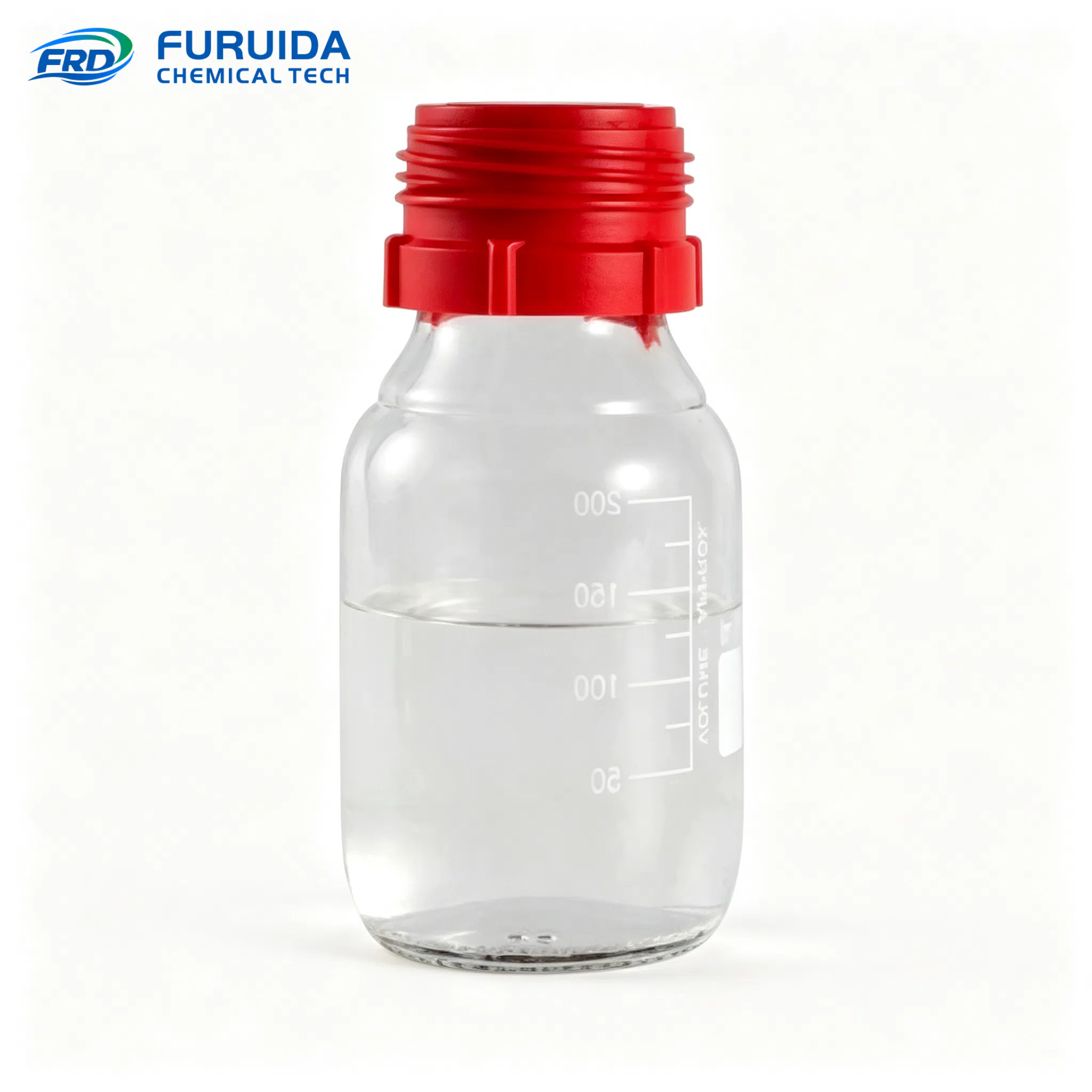
At ambient temperature and pressure, trichlorosilane is a free‑flowing, colorless volatile liquid with a pungent odour. It is highly flammable in air and presents fire hazards even at temperatures below ‑18 °C. Upon contact with open flame, it burns violently with red flames and white smoke, yielding silicon dioxide (SiO₂), hydrogen chloride (HCl) and chlorine gas (Cl₂), following the reaction: SiHCl₃ + O₂ → SiO₂ + HCl + Cl₂.
Trichlorosilane vapour can form explosive mixtures with air over a broad concentration range; severe explosions may occur under heating conditions. It features better thermal stability compared with dichlorosilane. When heated to 900 °C, it decomposes and releases toxic fumes of hydrogen chloride (HCl), chlorine gas (Cl₂) and elemental silicon (Si).
This compound fumes on exposure to moisture and undergoes violent reactions with water, described by the equation: 2SiHCl₃ + 3H₂O → (HSiO)₂O + 6HCl. It decomposes in alkaline solutions with hydrogen gas evolution via the reaction: SiHCl₃ + 3NaOH + H₂O → Si(OH)₄ + 3NaCl + H₂. Explosive reactions can be triggered upon contact with oxidizing agents.
Trichlorosilane participates in chemical reactions with acetylene, hydrocarbons and other organic hydrocarbons to generate various chlorosilane products. Typical reactions include SiHCl₃ + CH≡CH → CH₂CHSiCl₃ and SiHCl₃ + CH₂=CH₂ → CH₃CH₂SiCl₃. It can also be reduced to silane in the presence of lithium aluminium hydride or lithium borohydride.
Strong mechanical impact on its storage container may cause ignition of liquid trichlorosilane. It is soluble in organic solvents such as benzene. While it is non‑corrosive to iron and stainless‑steel materials under dry conditions, it corrodes most metals in the presence of moisture.
Products Chemical Properties
| Melting point | -127 °C |
| Boiling point | 32-34 °C(lit.) |
| density | 1.342 g/mL at 25 °C(lit.) |
| vapor density | 1 (vs air) |
| vapor pressure | 9.75 psi ( 20 °C) |
| refractive index | 1.4-1.402 |
| Fp | 7 °F |
| storage temp. | Refrigerator |
| solubility | Soluble in benzene, ether, heptane, chloroform and carbon tetrachloride. |
| form | Liquid |
| Specific Gravity | 1.342 |
| color | Colorless |
| Odor | Sharp, choking, like hydrochloric acid. |
| explosive limit | 70% |
| Water Solubility | decomposes |
| Sensitive | Air & Moisture Sensitive |
| Hydrolytic Sensitivity | 8: reacts rapidly with moisture, water, protic solvents |
| Merck | 14,9646 |
| Stability: | Stable, but extremely flammable. Pyrophoric - spontaneously ignites in air. Explosion hazard in air - note wide explosion limits. Reacts violently with water. Incompatible with moisture, acids, bases, strong oxidizing agents, alcohols, amines. |
| InChIKey | ZDHXKXAHOVTTAH-UHFFFAOYSA-N |
| CAS DataBase Reference | 10025-78-2(CAS DataBase Reference) |
| NIST Chemistry Reference | Trichlorosilane(10025-78-2) |
| EPA Substance Registry System | Trichlorosilane (10025-78-2) |
Safety Information
| Hazard Codes | F+,C |
| Risk Statements | 12-14-17-20/22-29-35 |
| Safety Statements | 16-26-36/37/39-43-45-7/9-43A |
| RIDADR | UN 1295 4.3/PG 1 |
| WGK Germany | 1 |
| RTECS | VV5950000 |
| F | 4.5-21-31 |
| TSCA | Yes |
| HazardClass | 4.3 |
| PackingGroup | I |
| HS Code | 28530090 |
| Hazardous Substances Data | 10025-78-2(Hazardous Substances Data) |
| Toxicity | LD50 orally in rats: 1.03 g/kg (Smyth) |
Products Application
Trichlorosilane (CAS 10025‑78‑2) stands as a critical organosilicon raw material widely used across the chemical and semiconductor industries. It is a primary feedstock for synthesizing various polymeric organosilicon compounds and functional organosilane derivatives. Besides organosilicon production, this chemical finds applications within industrial instrumentation sectors for related silicon‑based material fabrication.
Most notably, trichlorosilane acts as the fundamental precursor for polysilicon manufacturing. High‑purity polysilicon produced from trichlorosilane serves as the core material for photovoltaic solar cells and semiconductor wafers, supporting the development of the solar power and electronics industries.
Company Profile
Furuida (Jinan) Chemical Technology Co., Ltd., based in Shandong, China, is an integrated fine chemical enterprise active in R&D, production, sales, and global service. Its focus is new chemical materials; its foundation is integrity, quality, and customer-first service; its momentum comes from innovation, strict quality control, internationalization, higher operational standards, and brand building.
With an experienced foreign trade and technical support team, a mature global supply network, and strong supply chain capabilities, the company reaches annual sales above RMB 600 million and serves over 5,000 industrial clients across Asia, Europe, Africa, and Oceania.
Its portfolio includes pharmaceutical intermediates and raw materials, food additives, electroplating chemicals, water treatment agents, dye auxiliaries, functional materials, titanium compounds, metal salts, catalysts, and surfactants. These products support pharmaceuticals, electronics, coatings, rubber and plastics, fine chemicals, and water treatment. Furuida is committed to dependable, cost-competitive chemistry and one-stop global service.