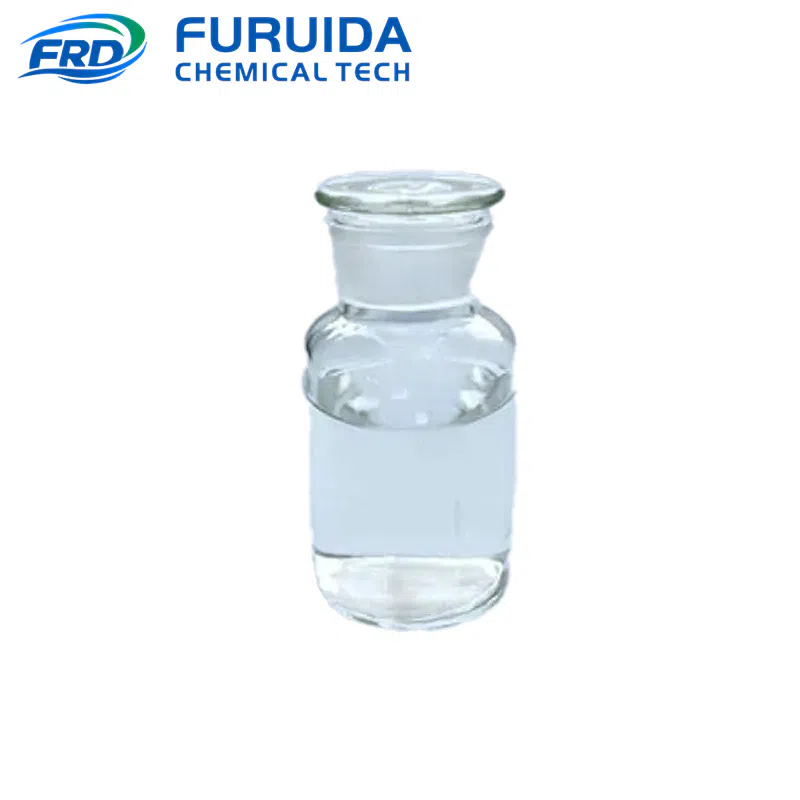
Glycerol CAS#56-81-5
Glycerol (CAS# 56-81-5) is a trihydric alcohol characterized by its colorless, viscous, and hygroscopic nature, as well as its sweet taste. Also referred to as glycerin, the term "glycerol" is often used to denote the pure chemical form, while "glycerin(e)" is more commonly employed in commercial applications to encompass various grades of the product.
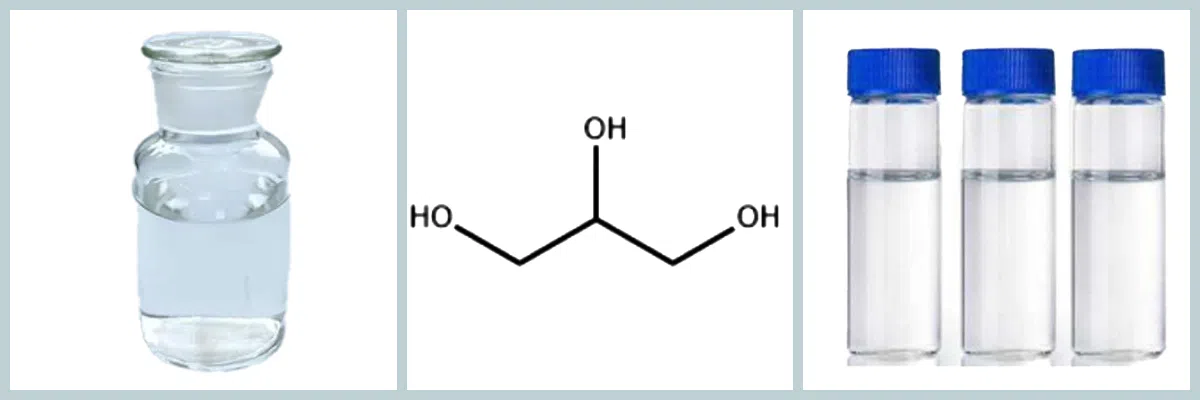
Glycerol Chemical Properties
| Melting point | 20 °C(lit.) |
| Boiling point | 290 °C |
| density | 1.25 g/mL(lit.) |
| vapor density | 3.1 (vs air) |
| vapor pressure | <1 mm Hg ( 20 °C) |
| refractive index | n20/D 1.474(lit.) |
| FEMA | 2525 | GLYCEROL |
| Fp | 320 °F |
| storage temp. | Store at +5°C to +30°C. |
| solubility | H2O: 5 M at 20 °C, clear, colorless |
| pka | 14.15(at 25℃) |
| form | Viscous Liquid |
| color | APHA: ≤10 |
| Specific Gravity | 1.265 (15/15℃)1.262 |
| Odor | Odorless. |
| PH Range | 5.5 - 8 |
| PH | 5.5-8 (25℃, 5M in H2O) |
| explosive limit | 2.6-11.3%(V) |
| Odor Type | odorless |
| biological source | synthetic (organic) |
| Water Solubility | >500 g/L (20 ºC) |
| Sensitive | Hygroscopic |
| λmax | λ: 260 nm Amax: 0.05 λ: 280 nm Amax: 0.04 |
| Merck | 14,4484 |
| JECFA Number | 909 |
| BRN | 635685 |
| Dielectric constant | 47.0(Ambient) |
| Exposure limits | OSHA: TWA 15 mg/m3; TWA 5 mg/m3 |
| Stability: | Stable. Incompatible with perchloric acid, lead oxide, acetic anhydride, nitrobenzene, chlorine, peroxides, strong acids, strong bases. Combustible. |
| Cosmetics Ingredients Functions | HUMECTANT SKIN CONDITIONING - HUMECTANT DENATURANT FRAGRANCE SOLVENT SKIN PROTECTING VISCOSITY CONTROLLING PERFUMING ORAL CARE HAIR CONDITIONING |
| InChIKey | PEDCQBHIVMGVHV-UHFFFAOYSA-N |
| LogP | -2.32 |
| Surface tension | 64mN/m at 20°C |
| CAS DataBase Reference | 56-81-5(CAS DataBase Reference) |
| NIST Chemistry Reference | 1,2,3-Propanetriol(56-81-5) |
| EPA Substance Registry System | Glycerine (56-81-5) |
| Absorption | ≤0.02 at 280nm in H2O at 0.5M ≤0.07 at 260nm in H2O at 0.5M |
Safety Information
| Hazard Codes | F,Xn |
| Risk Statements | 36-20/21/22-11 |
| Safety Statements | 24/25-39-26 |
| RIDADR | UN 1282 3/PG 2 |
| WGK Germany | 1 |
| RTECS | MA8050000 |
| F | 3 |
| Autoignition Temperature | 698 °F |
| TSCA | TSCA listed |
| HS Code | 29054500 |
| Hazardous Substances Data | 56-81-5(Hazardous Substances Data) |
| Toxicity | LD50 in rats (ml/kg): >20 orally; 4.4 i.v. (Bartsch) |
Product Applications
Glycerol serves as an essential raw material for the synthesis of nitroglycerin, acetic acid glycerol esters, surfactants, flavoring agents, alkyd resins, and ester gums. Additionally, it is used directly in antifreeze formulations, cosmetics, and inks.
It is highly versatile and functions in several capacities:
Water-retaining agent: It enhances moisture retention in baked goods such as bread and cakes.
Carrier solvent: It facilitates the effective incorporation of flavors, pigments, and water-soluble preservatives.
Thickener: It improves the texture of beverages and wine formulations.
Plasticizer: It softens candy, desserts, and meat products.
Sweetener: It provides a mild, gentle sweetness in food applications.
Gas chromatographic fixative: It helps stabilize samples during the analytical process.
Under EEC regulations, Glycerol is approved for use in alcoholic beverages, confectionery (such as candies and cakes), bakery products, coating glazes, meat and cheese coatings, gelatin-based sweets, and various other food categories.
Factory and Equipment Show