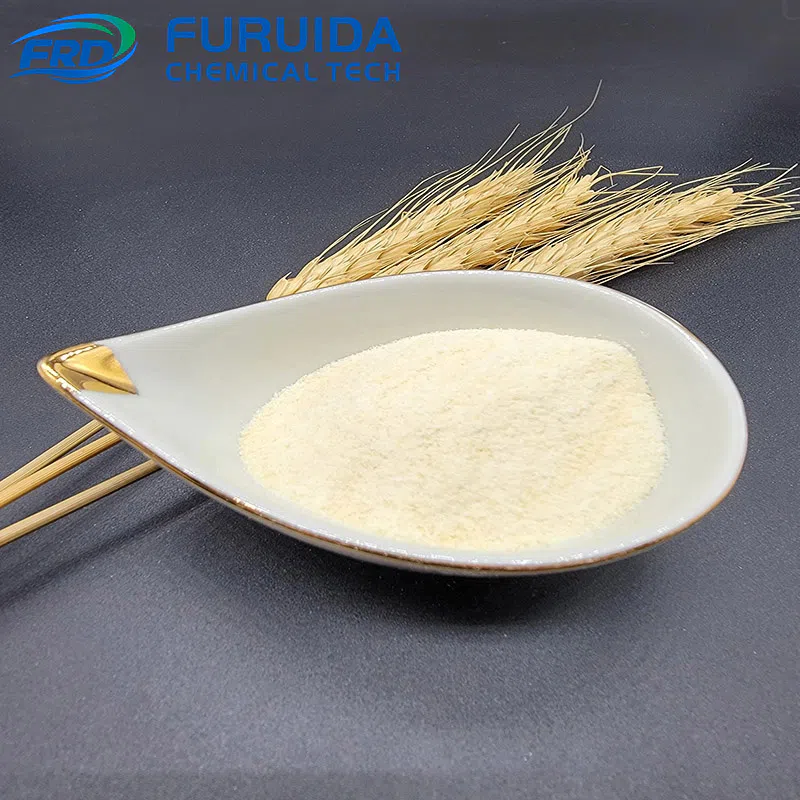
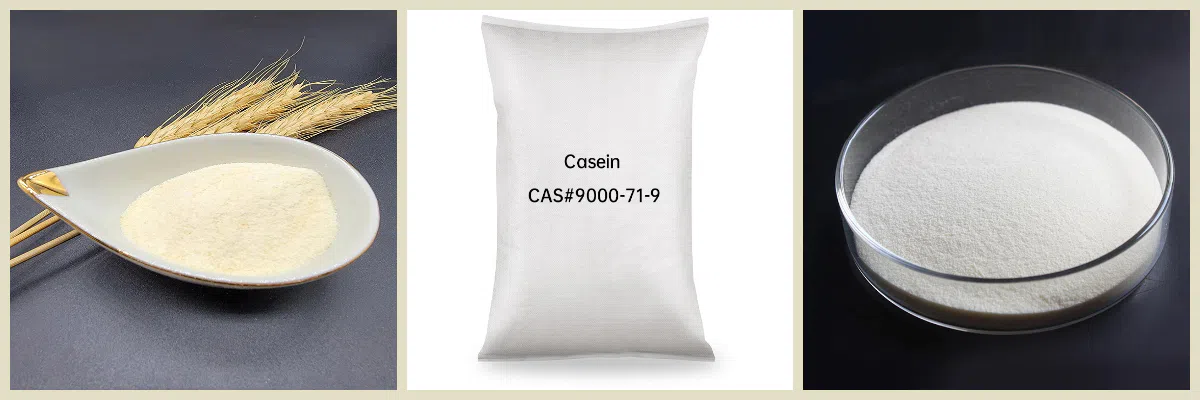
Casein CAS#9000-71-9
Casein derived from bovine milk is a phosphoprotein that naturally forms three-dimensional colloidal supramolecular micelles. It accounts for approximately 80% of the milk protein in bovine milk and consists primarily of four types: α-s1-casein, α-s2-casein, β-casein, and κ-casein.
Casein is considered a major protective component of bovine milk; it is also an Amphiphilic Properties, possessing both hydrophilic and hydrophobic characteristics.
Chemical Properties
| Melting point | 280 °C (dec.)(lit.) |
| density | 1.25 g/cm3 |
| refractive index | 1.57 |
| storage temp. | -20°C |
| solubility | H2O: insoluble, forms a cloudy suspension |
| form | purified powder |
| color | yellow to tan |
| Odor | Odorless |
| biological source | bovine milk (Hammarsten) |
| Water Solubility | SLIGHTLY SOLUBLE |
| Sensitive | Hygroscopic |
| Merck | 141883 |
| Dielectric constant | 6.1(Ambient) |
| Stability: | Stable. Combustible. Incompatible with strong oxidizing agents. |
| Cosmetics Ingredients Functions | HAIR CONDITIONING |
| ANTISTATIC | |
| SKIN CONDITIONING | |
| Cosmetic Ingredient Review (CIR) | Casein (9000-71-9) |
| InChIKey | BECPQYXYKAMYBN-UHFFFAOYSA-N |
| EPA Substance Registry System | Caseins (9000-71-9) |
| Safety Statements | 24/25 |
| WGK Germany | 3 |
| RTECS | FI3519500 |
| F | 46316 |
| TSCA | TSCA listed |
| HS Code | 35011000 |
| Storage Class | 11 - Combustible Solids |

Product Application
Casein is the primary protein in bovine milk; industrially, it is typically produced from skim milk by precipitation using lactic, hydrochloric, or sulfuric acid. It can also be produced using lactic acid-producing bacteria. Depending on the acid used for precipitation, the product is classified as lactic acid casein, hydrochloric acid casein, or sulfuric acid casein.
Casein is primarily utilized in the form of casein salts, with sodium caseinate and calcium caseinate being the most common types. Rennet casein is produced from skim milk by precipitation using rennet-type enzyme.
Casein is widely used to protein fortification of cereals and bread, and is also employed in the production of processed cheeses and fabricated cheeses.
Factory and Equipment Show