

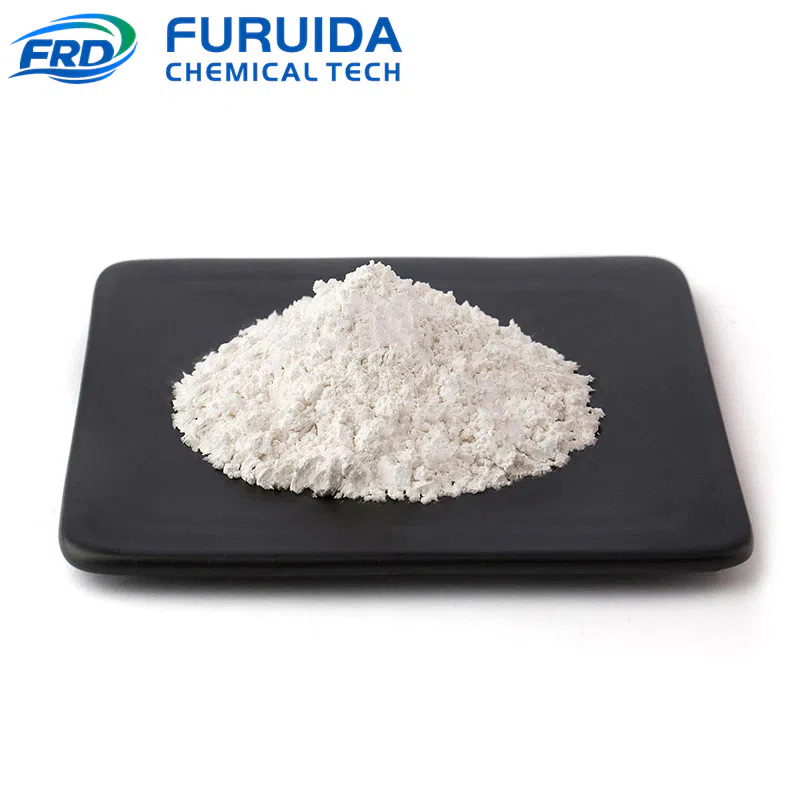
Dimethyl dicarbonate CAS#4525-33-1
Dimethyl dicarbonate (DMDC), also known as Viguolin, is a preservative used in fruit juice beverages; under applicable food additive standards, it is designated as INS No. 242.
DMDC is highly effective at eliminating various contaminating bacteria in fruit juice beverages, even at ambient or low temperatures. Its preservative action is closely linked to its ability to modify and inactivate key enzyme proteins within the bacterial cells.
Compared to other physical sterilization technologies, DMDC offers lower usage costs and is simple and safe to apply. It also has minimal impact on the taste, aroma, and color of the treated products.
Due to these characteristics, DMDC has become a key area of research in the development of emerging non-thermal sterilization technologies.
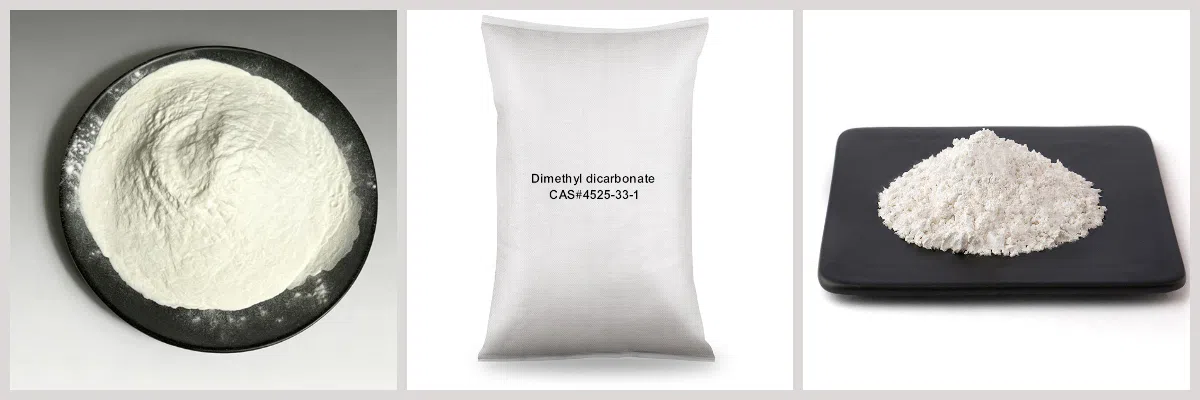
Dimethyl dicarbonate Chemical Properties
| Melting point | 15-17°C |
| Boiling point | 45-46 °C5 mm Hg(lit.) |
| density | 1.25 g/mL at 25 °C(lit.) |
| vapor pressure | 0.7 hPa (20 °C) |
| refractive index | n20/D 1.392(lit.) |
| Fp | 80 °C |
| storage temp. | Store below +30°C. |
| solubility | 35g/l (decomposition) |
| form | Oil |
| color | Colourless |
| explosive limit | 3-29.9%(V) |
| Water Solubility | 35g/L (decomposition) |
| BRN | 956715 |
| Stability: | Moisture Sensitive |
| InChI | 1S/C4H6O5/c1-7-3(5)9-4(6)8-2/h1-2H3 |
| InChIKey | GZDFHIJNHHMENY-UHFFFAOYSA-N |
| SMILES | O(C)C(=O)OC(=O)OC |
| LogP | 0.082 (est) |
| EPA Substance Registry System | Dicarbonic acid, dimethyl ester (4525-33-1) |
| Hazard Codes | T |
| Risk Statements | 21/22-23-34 |
| Safety Statements | 18-26-28-36/37/39-38-45 |
| RIDADR | UN 2927 6.1/PG 2 |
| WGK Germany | 3 |
| RTECS | HT0362500 |
| F | 46286 |
| Autoignition Temperature | 465 °C |
| TSCA | TSCA listed |
| HS Code | 2920 90 10 |
| HazardClass | 6.1(a) |
| PackingGroup | II |
| Storage Class | 6.1A - Combustible, acute toxic Cat. 1 and 2 |
| very toxic hazardous materials | |
| Hazard Classifications | Acute Tox. 2 Inhalation |
| Acute Tox. 4 Oral | |
| Eye Dam. 1 | |
| Skin Corr. 1B | |
| Hazardous Substances Data | 4525-33-1(Hazardous Substances Data) |
| Toxicity | LD50 orally in Rabbit: 335 mg/kg LD50 dermal Rat > 1250 mg/kg |

Product Application
Dimethyl dicarbonate (DMDC) is used as a microbial control agent in wine, ready-to-drink teas, non-juice-containing beverages, and carbonated diluted beverages containing fruit juice, fruit flavoring, or both, provided the juice content does not exceed 50%.
DMDC is widely used as an antimicrobial agent effective against a broad spectrum of microorganisms. It primarily targets yeasts, including genera such as Saccharomyces, Zygosaccharomyces, Rhodotorula, Candida, Pichia, Torulopsis, Torula, Endomyces, Kloeckera, and Hansenula. DMDC also exhibits bactericidal activity against various bacteria, including Acetobacter pasteurianus, Escherichia coli, Pseudomonas aeruginosa, Staphylococcus aureus, several Lactobacillus species, and Pediococcus cerevisiae. It has also been shown to be effective against Escherichia coli O157.
The antimicrobial action of DMDC stems from the inactivation of microbial enzymes, primarily through reactions with imidazole groups and amine groups in proteins, ultimately leading to the destruction of the microorganisms.
Any unreacted DMDC rapidly decomposes into methanol and carbon dioxide. The activity of DMDC is linked to its hydrolysis rate. DMDC Hydrolysis upon contact with water, with the rate determined by the temperature of the beverage or wine. Complete decomposition takes approximately four hours at 10°C (50°F) and about two hours at 20°C (68°F).
Factory and Equipment Show


