
Advantages of Glycerol
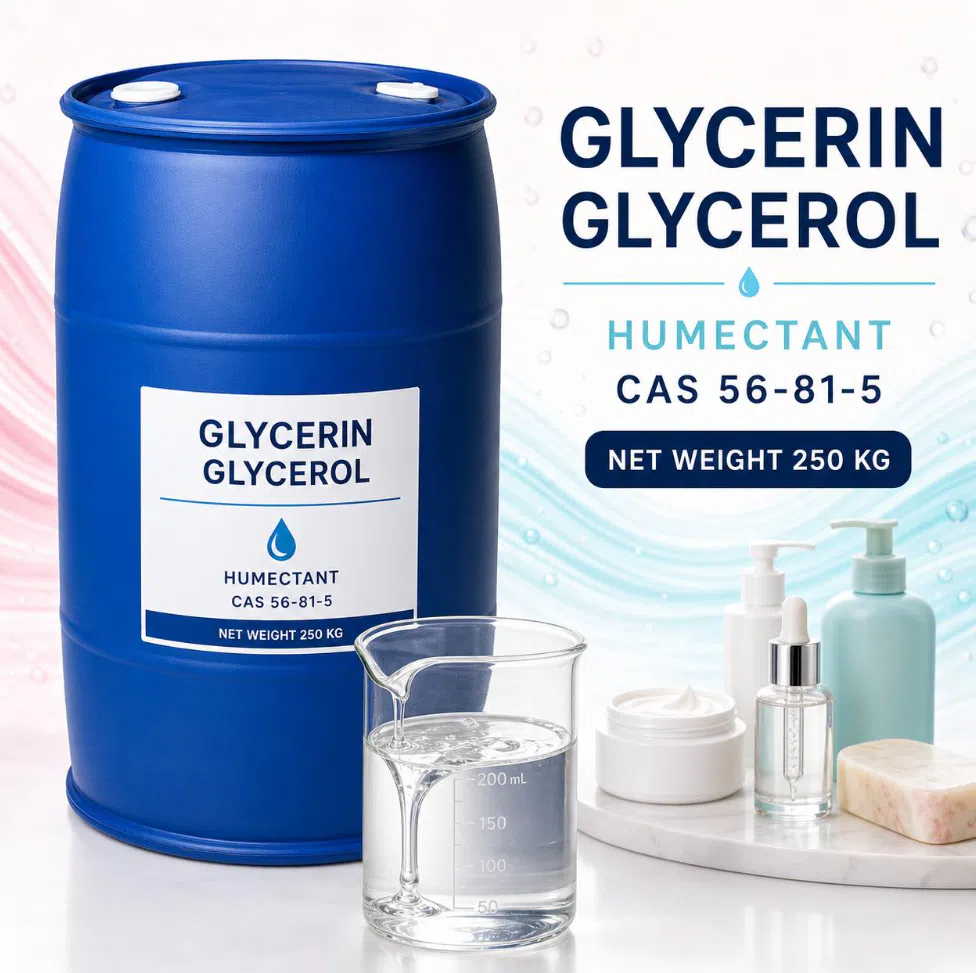
Glycerol (chemical formula: C₃H₈O₃; CAS No.: 56-81-5), also commonly known as glycerin, is a simple trihydric alcohol. It appears as a clear, colorless, odorless syrupy liquid with a mild sweet taste. Highly soluble in water and alcohols while only sparingly soluble in common oils and hydrocarbons, glycerol features low volatility, excellent hygroscopicity and non-toxic properties. It is widely applied in cosmetics, pharmaceuticals, food, coatings and textile sectors, mainly functioning as a humectant, solvent, plasticizer and sweetener.
CAS No.: 56-81-5
What is Glycerol?
Glycerol is predominantly obtained through two production routes: as a by-product from the transesterification of vegetable oils and animal fats for biodiesel or soap saponification, or via chemical synthesis starting from propylene. The finished product is a viscous, stable liquid with outstanding moisture retention and freeze-resistant performance.
Its most prominent feature lies in its balanced hygroscopicity and chemical compatibility. When added into formulations, glycerol binds water molecules to lock in moisture and prevent drying and cracking of materials. It acts as a safe solvent for many water-soluble active ingredients and improves the flexibility and plasticity of end products. Besides, glycerol exhibits good biological compatibility and low irritation, which makes it suitable for direct contact with skin and oral consumption when meeting relevant grade standards.
CAS No.: 56-81-5
Applications of Glycerol
Glycerol serves a broad spectrum of industries including personal care, pharmaceuticals, food, coatings, textiles and chemical manufacturing.
Cosmetics & Personal Care: As a classic humectant, it draws moisture from the ambient environment and forms a hydrated film on the skin surface, widely used in creams, lotions, serums, lip balms, shampoos, toothpaste and soaps. It softens skin, reduces dryness, improves spreadability of formulations and relieves mild skin irritation.
Pharmaceuticals: In pharmaceutical preparations, glycerol works as a solvent, humectant, sweetener and antifreeze agent. It is used in topical ointments, suppositories, oral syrups and tablet excipients, helping maintain formulation stability, mask unpleasant bitter tastes and keep semi-solid preparations from drying out.
Food & Beverage Industry: Classified as food additive E422, glycerol acts as a humectant, sweetener and softener in baked goods, confectionery, chewing gum and low-moisture foods. It inhibits hardening, extends shelf life, adjusts sweetness and serves as a carrier for food flavors and colorants.
Coatings & Resin Industry: It is a key raw material for synthesizing alkyd resins, polyester resins and epoxy derivatives. In water-based paints and inks, glycerol functions as a coalescing agent and plasticizer, enhancing film flexibility, preventing brittleness and improving leveling performance.
Textile Industry: Applied as a wetting agent and lubricant for fibers, yarns and fabrics. It reduces static electricity, prevents textile cracking during processing, improves dye penetration and keeps fabrics soft and wrinkle-resistant.
Other Industrial Applications: Glycerol is also used as antifreeze, raw material for biopolymer production, release agent and processing aid in many chemical fields. Benefiting from its non-toxicity, hygroscopicity, good solubility and stable chemical properties, glycerol remains one of the most versatile and safe industrial additives, with its application boundaries continuously expanding.


