

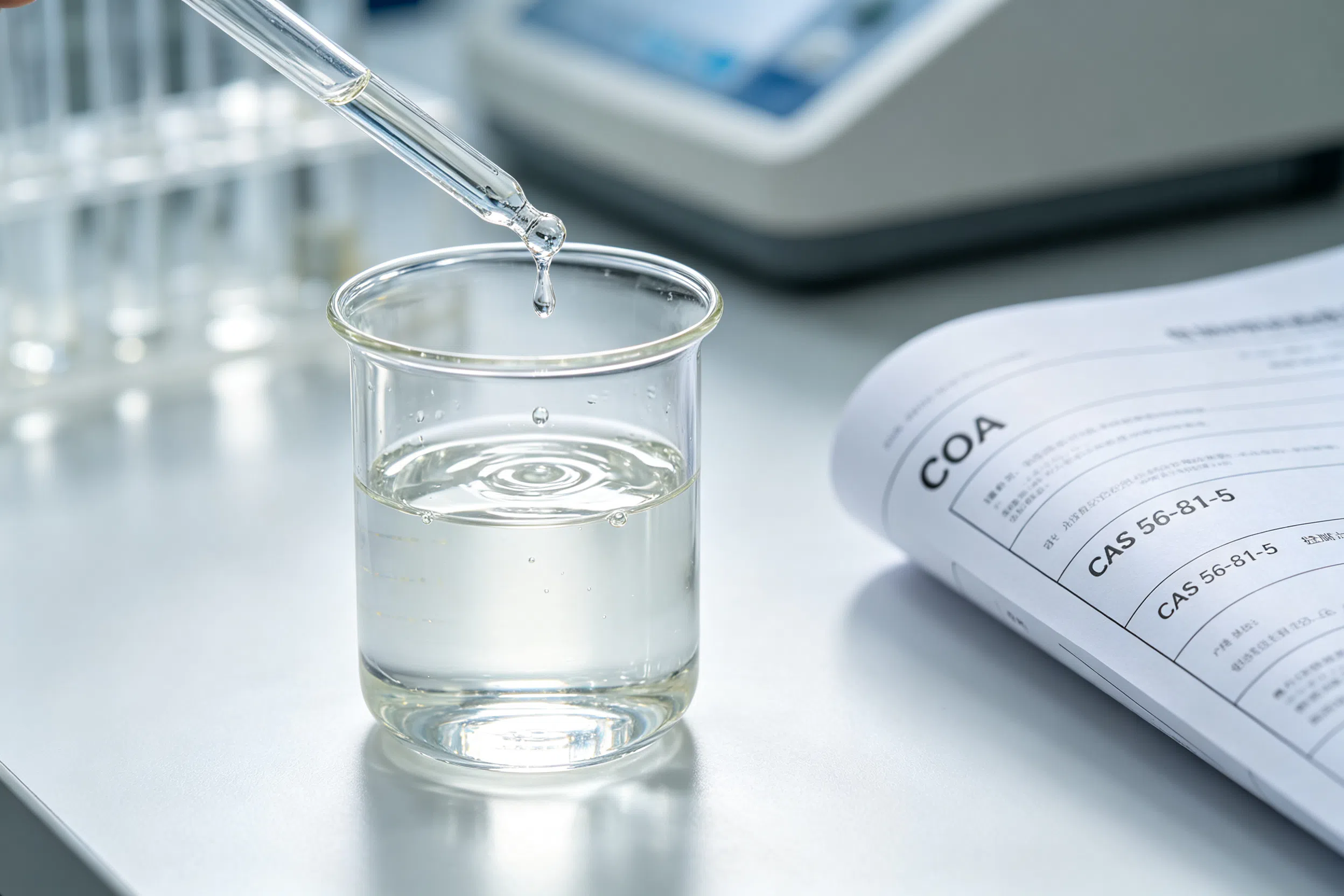
Glycerol CAS#56‑81‑5 | USP Food Industrial Grade Bulk Chemical Supply
High‑purity glycerol CAS#56‑81‑5 for pharma, cosmetics & food. Vegetable‑sourced, certified bulk chemical. Request quotation & technical datasheet today.
Glycerol CAS#56‑81‑5: Market Update, Grade Specifications and Key Considerations for International Buyers
Global Industry Background for Glycerol (CAS#56‑81‑5)
Glycerol, also known as glycerine, chemical registry number CAS#56‑81‑5, is a non‑toxic polyol compound with molecular formula C₃H₈O₃, appearing as colorless, odorless, hygroscopic viscous liquid. Most commercial‑volume glycerol is obtained as co‑product from biodiesel transesterification and oleochemical saponification of vegetable oils, while partial volumes are produced via synthetic chemical routes.
The global glycerol market reached USD 3.12 billion in 2025 and is projected to expand at a CAGR of 5.8% from 2026‑2034, driven by growing downstream demand across pharmaceuticals, personal‑care cosmetics, food additives and industrial chemical sectors. Asia‑Pacific contributes the largest market share, benefiting from abundant vegetable‑oil feedstock and expanding refining capacity for glycerol CAS#56‑81‑5. Every ton of biodiesel generates roughly 100 kg crude glycerol, continuously feeding raw‑material supply chains for downstream distillation and purification of refined glycerol.
B2B importers, formulators and manufacturing distributors across Europe, North America, Middle East and Southeast Asia seek stable bulk supplies of glycerol CAS#56‑81‑5. Buyers face common pain points including fluctuating feedstock‑driven price volatility, inconsistent purity levels, complicated regulatory‑certificate verification and unstable lead‑time for large‑volume container shipments.
Main Product Grades, Technical Specifications & Manufacturing Process
Core Grade Classification of Glycerol CAS#56‑81‑5
Commercial glycerol CAS#56‑81‑5 is categorized according to purity and compliance standards, which directly decide end‑use feasibility:
Industrial‑grade glycerol: Purity 95.0‑99.0 %. Applied for antifreeze, resin synthesis, chemical intermediate processing. No strict pharmacopoeia compliance required.
Food‑grade glycerol (FCC/E422): Min purity 99.5 %, complies with food‑additive regulations, suitable for food, beverage and animal‑nutrition formulations, needs Halal, Kosher and food‑safety documentation.
USP / EP Pharmaceutical‑grade glycerol CAS#56‑81‑5: 99.5‑99.7 % minimum purity, strict control on methanol residue, heavy‑metal and impurity limits, follows United States Pharmacopeia and European Pharmacopoeia requirements, mandatory for drug excipient, oral‑liquid and topical‑medication manufacturing.
Crude glycerol normally holds purity 75‑85 %, contains residual methanol, soap and salts, and must go through multi‑stage distillation, ion‑exchange de‑ionization and filtration to become refined glycerol CAS#56‑81‑5 for food, cosmetic and pharmaceutical applications.
Brief Manufacturing Workflow for Refined Glycerol CAS#56‑81‑5
Raw‑material intake: Crude glycerol by‑product collected from biodiesel or soap‑saponification workshops.
Pre‑treatment: Neutralization, sedimentation to remove soap, particulate impurities.
Multi‑vacuum distillation: Separate water, methanol and light‑component impurities under low‑pressure distillation conditions.
Ion‑exchange purification: Remove residual inorganic salts, improve transparency and stability.
Filtration & quality testing: Laboratory full‑item inspection for purity, moisture, heavy‑metals, residual solvents according to grade‑specific standards.
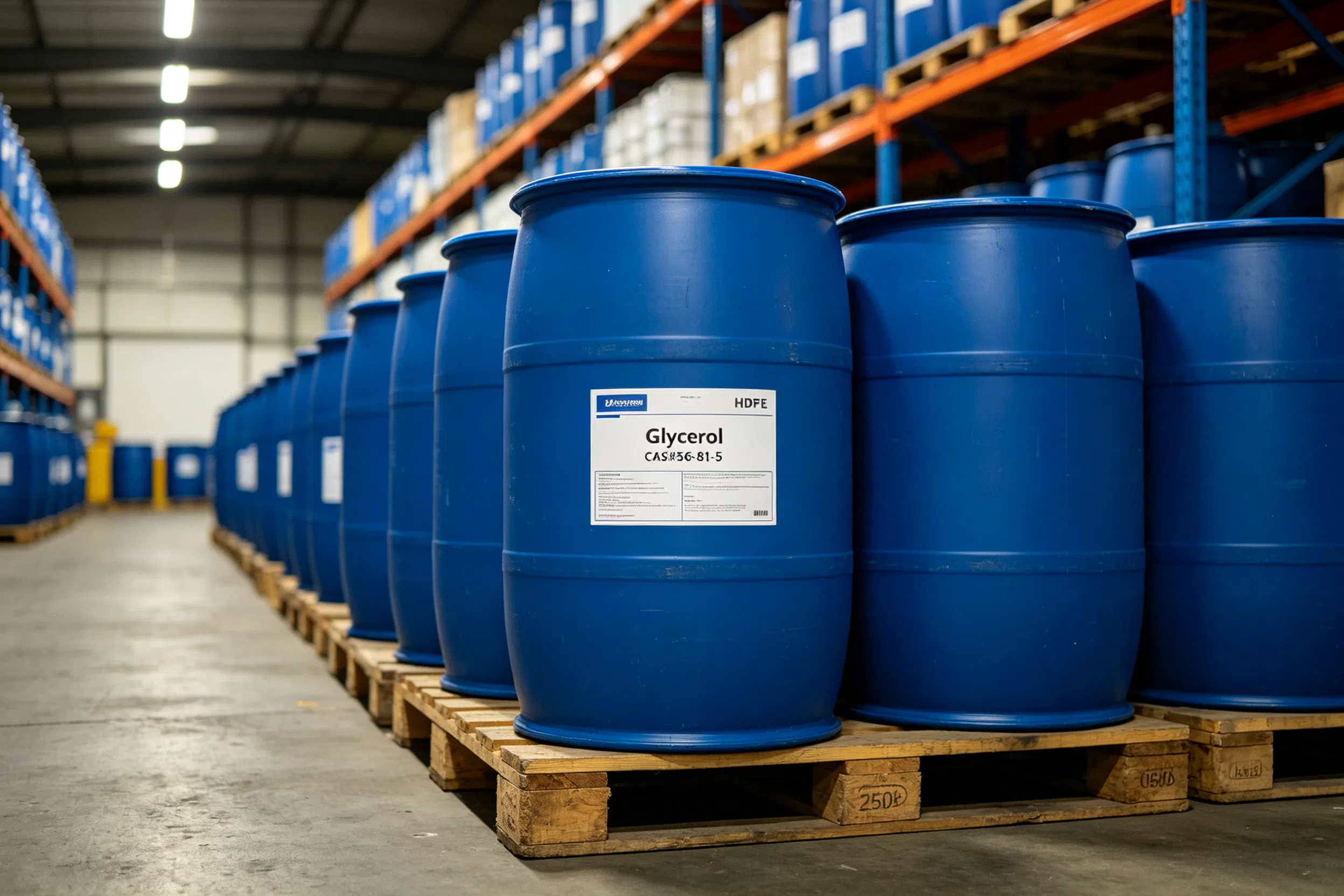
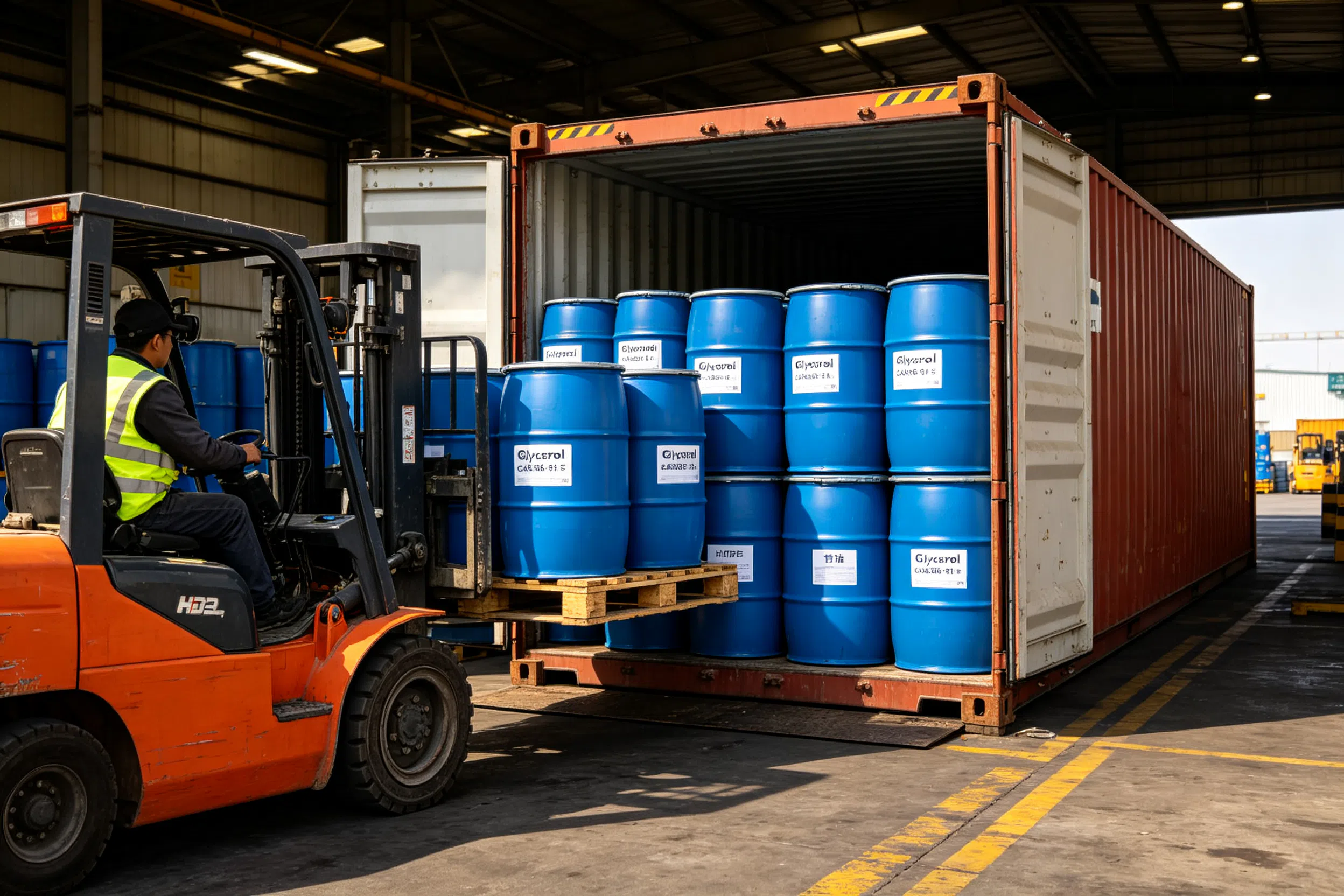
Filling & packaging: Packed in 250 kg HDPE drums or ISO tank containers for sea‑bulk export shipments.
Key Market Trends Shaping lobal Glycerol CAS#56‑81‑5 Procurement
Growing preference for vegetable‑source glycerol CAS#56‑81‑5: Global brand owners of cosmetics, clean‑label food and pharma products increasingly avoid animal‑derived feedstock. Plant‑based glycerol commands stable market premium and gains easier market access in EU and North America consumer‑goods sectors.
Stricter regulatory thresholds for high‑purity grades: FDA and EU food‑chemical authorities enforce tighter impurity‑control rules for USP‑grade glycerol. Buyers now demand complete batch‑traceability, COA, safety‑data‑sheet SDS and audit‑ready factory documentation, not merely test reports of glycerol CAS#56‑81‑5.
Supply‑chain differentiation between crude and refined glycerol: Crude glycerol trade remains price‑sensitive spot business. Refined USP / food‑grade glycerol CAS#56‑81‑5 tends toward long‑term annual framework contracts, as formulation factories cannot afford quality fluctuations of incoming raw materials.
Price volatility linked to vegetable‑oil & biodiesel cycles: Since glycerol CAS#56‑81‑5 is largely biodiesel co‑product, palm‑oil and vegetable‑oil price swings directly shift export quotation across global regions, putting pressure on importer cost budgeting.
B2B Buyers’ Key Procurement Pain Points for Glycerol CAS#56‑81‑5
Many international purchasing teams encounter practical risks when sourcing glycerol CAS#56‑81‑5:
Receiving goods with actual purity below contractual specification, especially for food‑ and pharma‑grade consignments.
Suppliers unable to provide complete SDS, COA, Halal / Kosher or GMP‑relevant certification required for customs clearance and local regulatory filing.
Long production lead‑time and inflexible MOQ, unable to balance trial‑order sample demand and full‑container bulk shipments.
Insufficient traceability documentation; batches cannot satisfy customer audit requirements in pharmaceutical and cosmetic manufacturing lines.
Professional chemical suppliers should deliver clear grade differentiation, complete compliance documentation, sample support before bulk order and stable container‑scale delivery capacity for glycerol CAS#56‑81‑5.
Frequently Asked Questions (FAQ) for Glycerol CAS#56‑81‑5 B2B Purchasers
Q1: What is the difference between glycerol CAS#56‑81‑5 crude and refined grade?
A: Crude glycerol usually shows 75‑85 % purity, contains methanol, soap impurities and is mainly for further re‑refining. Refined glycerol CAS#56‑81‑5 achieves 99.5 %+ purity after distillation and ion‑exchange purification and can be directly applied in food, cosmetic and pharmaceutical production.
Q2: Can industrial‑grade glycerol CAS#56‑81‑5 substitute USP‑grade glycerol for cosmetic raw‑material use?
A: Not recommended. Industrial‑grade glycerol has relaxed heavy‑metal and impurity indexes. Most EU and US cosmetic‑regulatory frameworks require USP or FCC‑certified glycerol for skin‑contact finished‑goods production to avoid safety‑compliance risks.
Q3: What standard documents should suppliers provide for export glycerol CAS#56‑81‑5 shipments?
A: Mandatory documents include SDS safety‑data‑sheet, batch‑specific COA certificate‑of‑analysis. For food/pharma grade: relevant certification such as Halal, Kosher, GMP documents as requested by destination‑country customs and end‑user audit teams.
Q4: What are standard export packaging options for bulk glycerol CAS#56‑81‑5?
A: Common options: 250 kg HDPE plastic drums, or ISO tank containers for large‑volume sea freight. Shelf‑life of properly‑stored refined glycerol CAS#56‑81‑5 reaches 24 months, stored in cool, shaded warehouse conditions, avoid direct sunlight exposure.
Call‑to‑Action for Global B2B Buyers
If you are searching for reliable bulk‑volume glycerol CAS#56‑81‑5 (industrial / food / USP‑pharma vegetable‑derived grade), contact our sales team to obtain latest bulk quotation, full SDS‑COA documentation and product sample support. We support small trial batches and full‑container sea export, providing technical consultation to match your exact formulation‑grade requirement. Submit your inquiry to receive detailed technical datasheet and delivery‑schedule proposal.


