
What Is Glycerin?
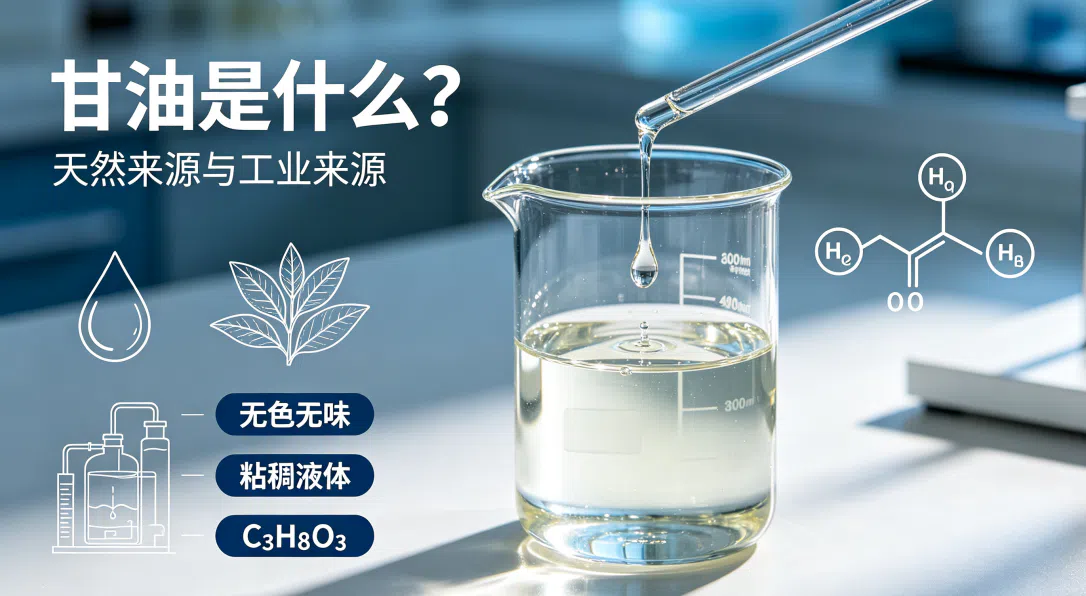
Glycerin, also known as glycerol, is a colorless, odorless, viscous, and transparent liquid with the chemical formula C₃H₈O₃. It is a simple polyol that occurs naturally in animal and vegetable fats and oils, and is produced as a byproduct of saponification and biodiesel manufacturing. Thanks to its hygroscopic, moisturizing, and biocompatible properties, glycerin finds widespread use across industrial, pharmaceutical, cosmetic, and food applications.
Where Does Glycerin Come From?
Glycerin is obtained through two primary routes: first, as a byproduct of natural fats and oils (such as vegetable oils and animal fats) during saponification or hydrolysis; second, through chemical synthesis from petrochemical feedstocks like propylene. In recent years, the rapid growth of the biodiesel industry has significantly increased the supply of byproduct glycerin, driving its expanded use across a growing range of applications.
Key Properties of Glycerin
The glycerin molecule contains three hydroxyl groups, which give it exceptional hydrophilicity and moisture-retention capacity. It can absorb moisture from the air and form a protective film on the skin's surface, while also offering good solubility and stability. In addition, glycerin is non-toxic and non-irritating, and is recognized as Generally Recognized as Safe (GRAS) by the U.S. FDA, making it suitable for food and pharmaceutical use.
Main Applications of Glycerin
Cosmetics and Personal Care
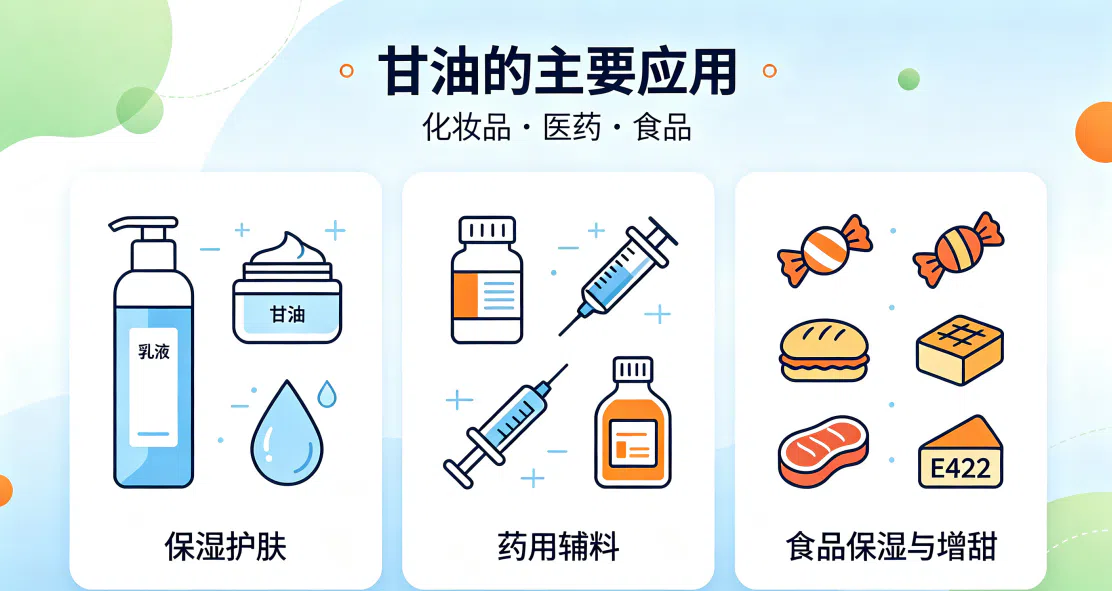
Glycerin is one of the most widely used humectants, commonly added to creams, lotions, cleansers, toothpaste, and shampoos. It helps skin retain moisture, improves dryness and roughness, and strengthens the skin barrier, making it suitable for all skin types.
Pharmaceutical Applications
In pharmaceuticals, glycerin serves as a solvent, humectant, sweetener, and excipient. It appears in cough syrups, suppositories, ointments, and injectables. Glycerin is also used clinically to reduce intracranial and intraocular pressure, playing an important role in emergency care.
Food Industry
As a food additive (E422), glycerin functions as a humectant, solvent, and sweetener. It is commonly found in candies, baked goods, meat products, and low-fat foods, helping to maintain moisture and texture.
Industrial Applications
Glycerin has broad industrial uses, including:
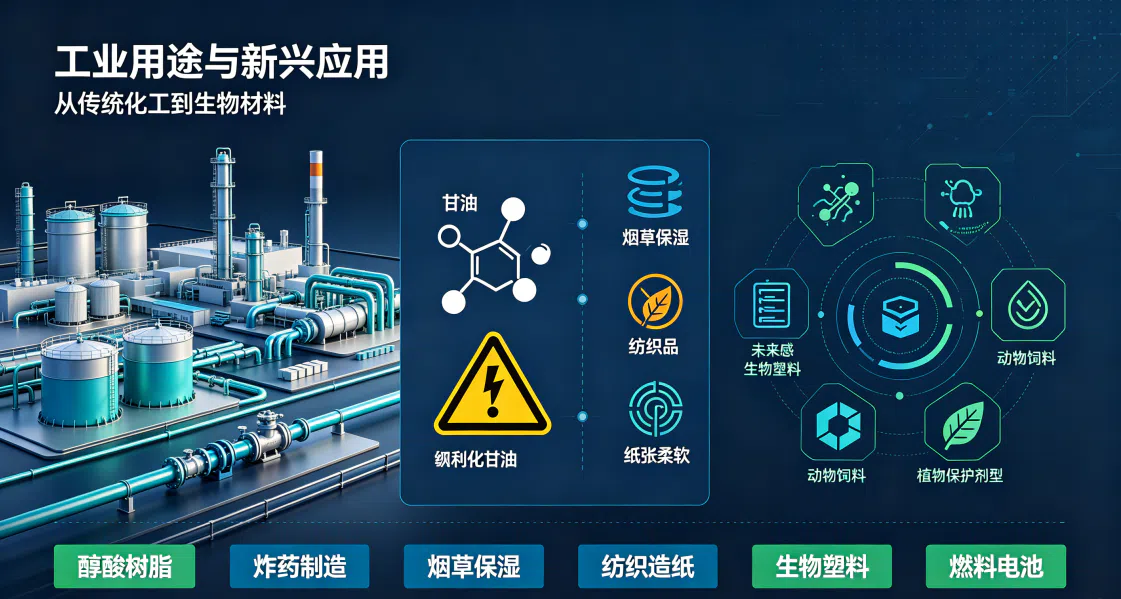
Alkyd resins and coatings: as a synthesis raw material, improving flexibility and adhesion
Explosives manufacturing: used in the production of nitroglycerin
Tobacco: as a humectant to prevent drying and crumbling
Textiles and papermaking: as a lubricant and softener
Pharmaceutical and cosmetic intermediates: participating in various chemical synthesis processes
Other Emerging Uses
In recent years, glycerin has also been studied for:
Feedstock for bioplastics (such as polyhydroxyalkanoates)
Fuel cells and energy storage technologies
Animal feed additives
Plant protection formulations
Safety and Usage Recommendations
Glycerin is widely regarded as a safe cosmetic and food ingredient, though high concentrations may cause mild irritation in sensitive skin. In food and pharmaceutical applications, usage limits set by relevant regulations should be observed. Industrial-grade glycerin may contain impurities and should not be used for food or pharmaceutical purposes.


