
Poly Aluminium Chloride CAS#1327-41-9 | Water Treatment Coagulant Supplier
Poly Aluminium Chloride CAS#1327-41-9 is an efficient inorganic coagulant for wastewater & drinking water treatment. Learn specs, applications, market trends & request quotes.
Poly Aluminium Chloride, commonly abbreviated as PAC, is a high-performance inorganic polymeric coagulant widely adopted across municipal water purification, industrial wastewater treatment and sludge dewatering sectors. As global authorities tighten discharge standards for water pollutants, demand for reliable, cost-effective coagulants continues to rise, positioning Poly Aluminium Chloride as one of the most essential chemicals in the water treatment supply chain. International buyers including water plant operators, engineering contractors and chemical distributors prioritize product stability, low heavy metal content and consistent basicity when sourcing Poly Aluminium Chloride, making technical documentation and third-party certification core evaluation criteria for bulk procurement.
Global Industry Background and Latest Market Data for Poly Aluminium Chloride
The worldwide water treatment chemical market maintains steady growth driven by urbanisation, industrial expansion and stricter environmental regulations in Asia-Pacific, Europe and North America. Population growth increases pressure on municipal drinking water infrastructure, while manufacturing sectors such as textile, paper, petrochemical and food processing generate large volumes of wastewater requiring proper clarification before discharge or reuse. Poly Aluminium Chloride accounts for a major share of the inorganic coagulant market, replacing traditional aluminium sulphate in many projects due to superior settling performance and lower dosage requirements.
Recent market research indicates that the Asia-Pacific region dominates both production and consumption of Poly Aluminium Chloride, with China serving as a primary manufacturing hub exporting solid and liquid grades to over 80 countries. Rising investment in desalination and water recycling projects further fuels market expansion. Buyers are gradually shifting focus from pure price comparison to product quality consistency, compliance with drinking water standards such as NSF, and carbon footprint of production. This shift creates opportunities for manufacturers who can supply certified low-toxicity Poly Aluminium Chloride with stable basicity ranges.
Key Industry Trends Shaping Poly Aluminium Chloride Procurement
One dominant trend is the growing demand for low-heavy-metal Poly Aluminium Chloride for potable water applications. Many national regulators have updated limits on lead, arsenic and cadmium in water treatment chemicals, eliminating substandard products from the international export market. Another notable trend is the preference for custom basicity grades. Liquid Poly Aluminium Chloride with basicity between 40% and 90% delivers different flocculation effects; high basicity variants reduce overall chemical consumption and sludge generation, which helps end users cut operational costs.
Sustainability requirements are also reshaping buyer selection. B2B purchasers increasingly ask suppliers for production environmental reports and packaging optimisation options. Logistics efficiency has become a critical pain point: liquid Poly Aluminium Chloride carries higher freight costs, so distributors often select solid powder forms for long ocean shipments and re-dissolve the product locally. This logistics consideration is a key factor affecting order formulation for bulk importers.
Technical Profile, Product Structure and Manufacturing Process of Poly Aluminium Chloride
Core Technical Parameters and Chemical Structure
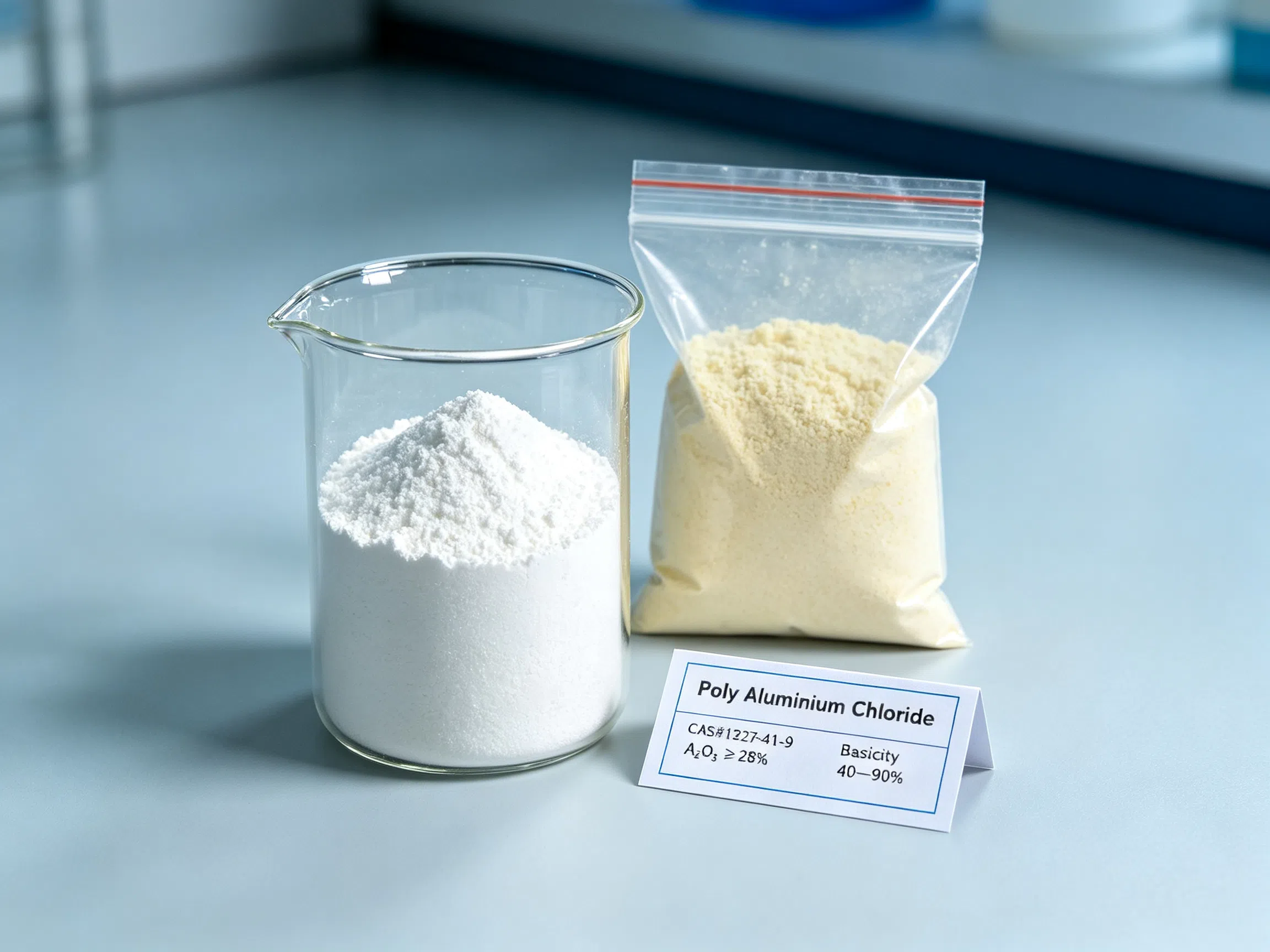
Poly Aluminium Chloride is a polymeric inorganic compound composed of polyhydroxy aluminium chloride complexes. Its performance heavily depends on basicity, aluminium oxide content and insoluble matter proportion. Standard solid PAC powder typically features Al₂O₃ ≥28%, while liquid products usually reach 10%–16% Al₂O₃ content. Basicity, the ratio of hydroxyl groups to aluminium ions, determines floc formation speed, precipitate density and residual aluminium concentration after treatment.
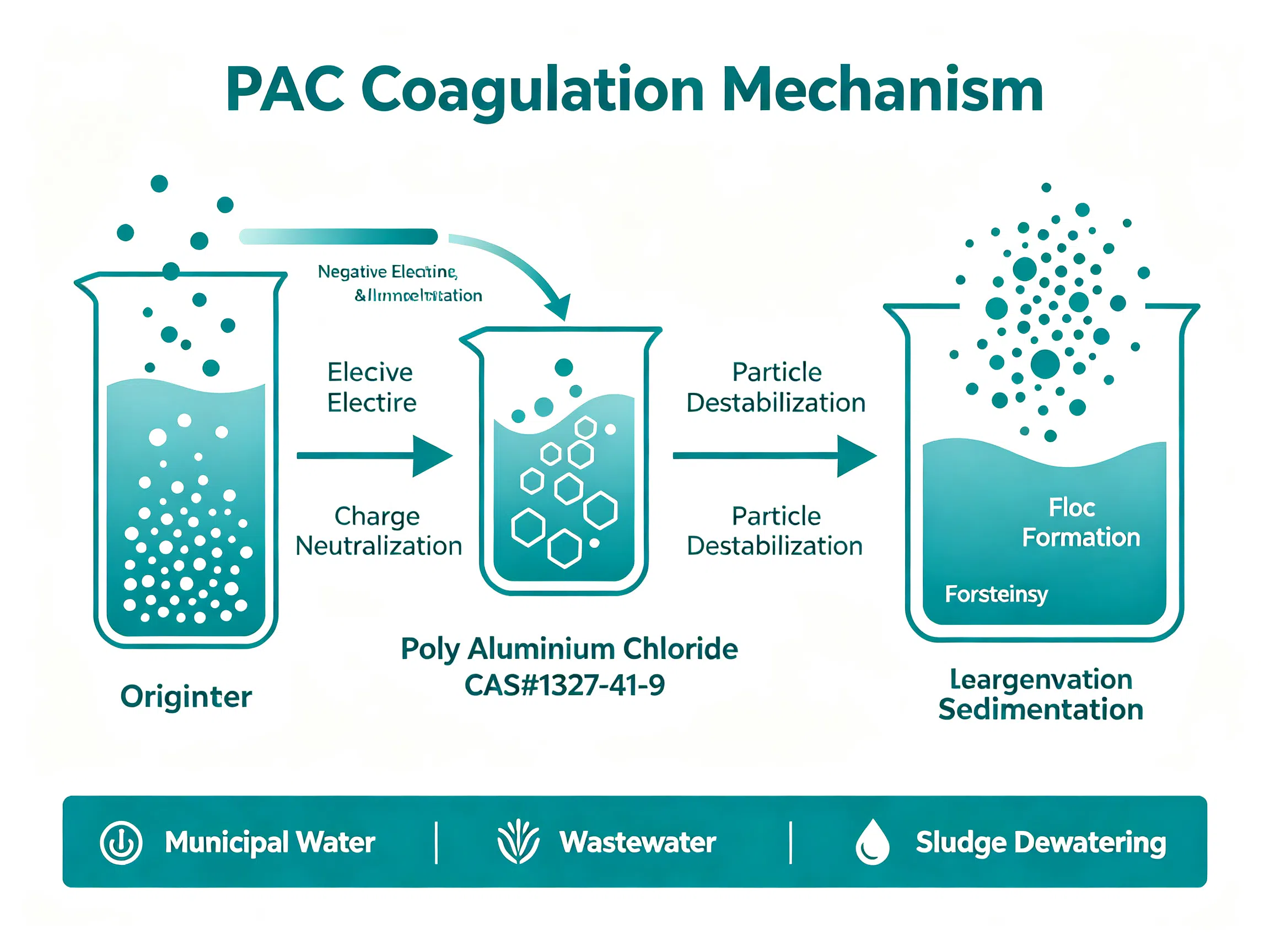
When added to raw water, Poly Aluminium Chloride rapidly hydrolyses to generate multi-charged hydroxyl aluminium complexes. These complexes neutralise negative surface charges on suspended particles, colloids, organic matter and microbial cells. Particle destabilisation promotes aggregation into large, fast-settling flocs, removing turbidity, chroma, phosphorus and partial organic contaminants efficiently. Compared with alum, Poly Aluminium Chloride works effectively across a wider pH range of 5.0–9.0 and requires shorter reaction time.
Simplified Manufacturing Process
Commercial Poly Aluminium Chloride is produced through polymerisation reactions of aluminium-containing raw materials with hydrochloric acid under controlled temperature and pressure. Raw material selection directly impacts final purity. High-grade PAC for drinking water uses aluminium hydroxide ore, while industrial-grade products may adopt aluminium ash or bauxite.
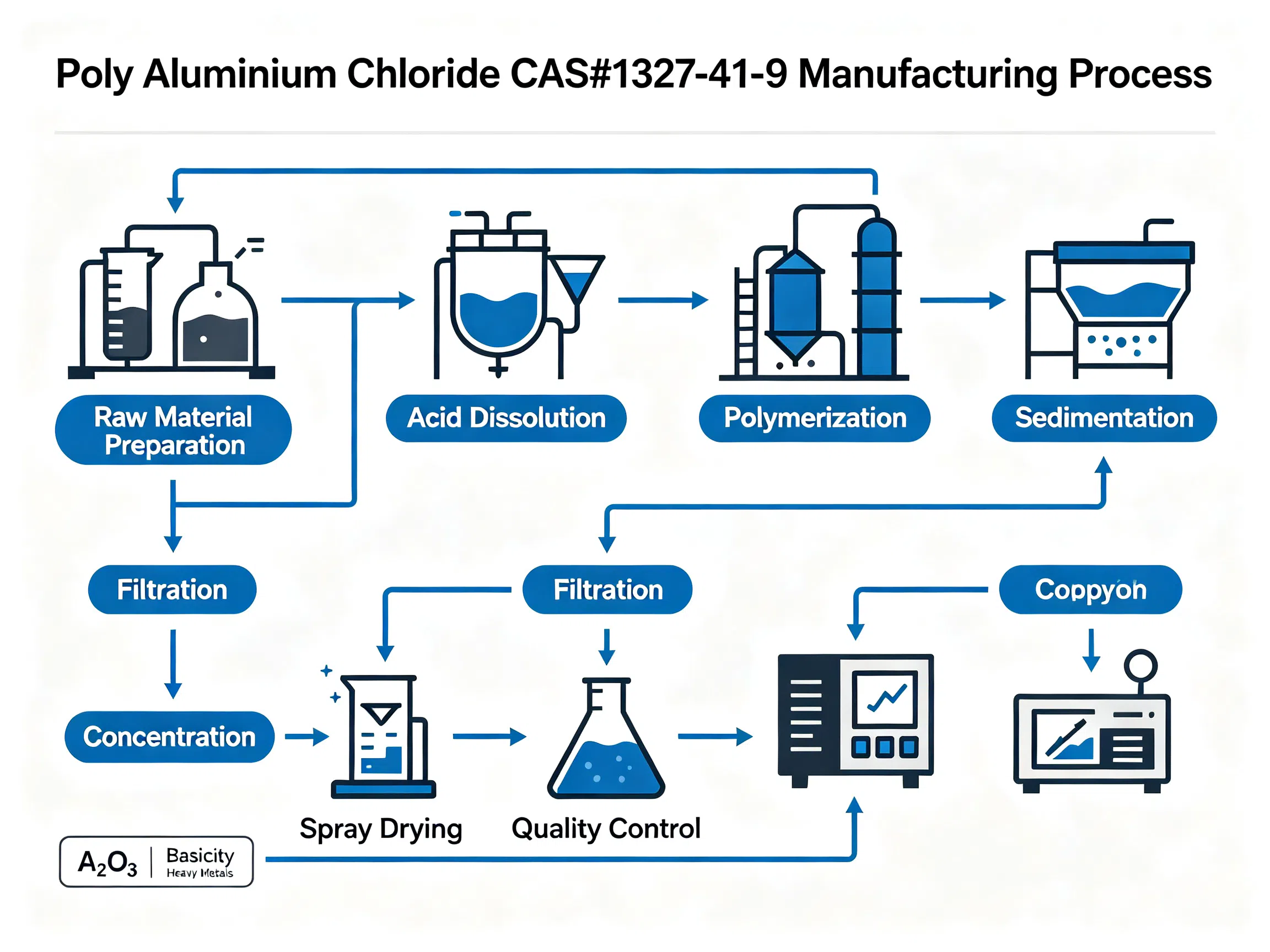
The production workflow includes raw material proportioning, acid dissolution, polymerisation, sedimentation, filtration and concentration. Liquid Poly Aluminium Chloride can be packaged directly after filtration, whereas solid powder is made by spray drying the qualified liquid concentrate. Spray-dried powder features uniform particle size, fast dissolution and low insoluble residue, which is favoured by overseas water treatment contractors. Quality control sampling is conducted at every stage to monitor Al₂O₃, basicity and heavy metal levels to meet international chemical export standards.
Primary Applications and B2B Buyer Pain Points for Poly Aluminium Chloride
Main Application Scenarios
The largest application of Poly Aluminium Chloride lies in municipal drinking water clarification, removing suspended solids and organic colloids before filtration and disinfection. In industrial wastewater treatment, it treats wastewater from textile mills, pulp and paper plants, mining operations and food factories to reduce turbidity and total phosphorus. It is also widely used for sludge thickening and dewatering, river reservoir water pre-treatment, and swimming pool water purification.
Common Pain Points for International Buyers
Many importers encounter inconsistent quality between batches of Poly Aluminium Chloride. Fluctuations in basicity and heavy metal content may cause unstable water outlet quality and non-compliance with local environmental rules. Another frequent challenge is inadequate test certificates; some suppliers only provide internal inspection reports instead of internationally recognised third-party test documents, delaying customs clearance and project acceptance. Logistics and storage issues also trouble buyers: liquid Poly Aluminium Chloride CAS#1327-41-9 is corrosive to ordinary containers and has limited shelf life, while powder products need moisture-proof packaging during maritime transport.
Technical Comparison of Different Poly Aluminium Chloride Grades
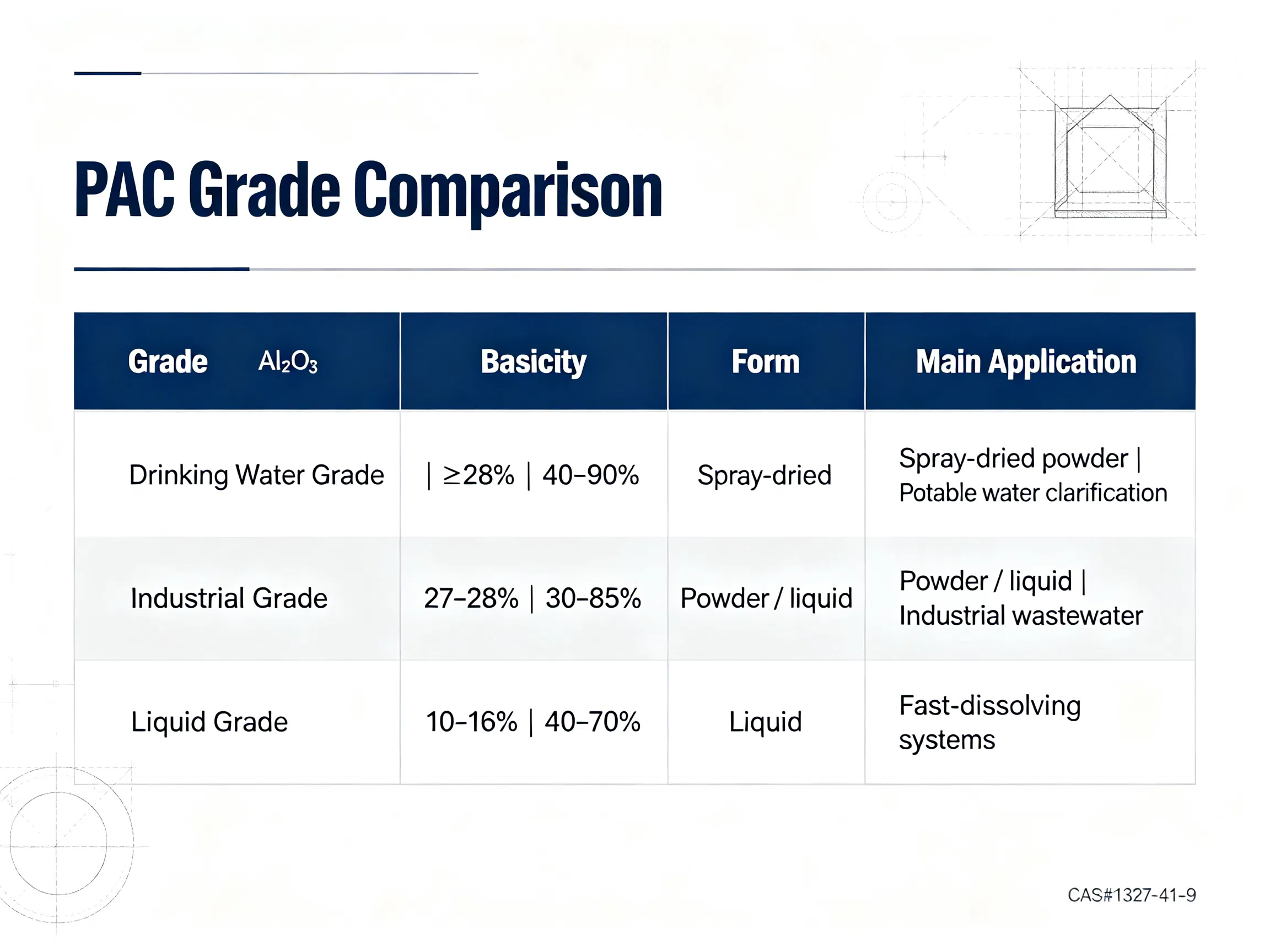
The varied grades of Poly Aluminium Chloride serve distinct end markets, making grade selection one of the most critical decisions for procurement teams. Spray-dried solid PAC is the premium export option for potable water projects with low insoluble impurities. Roller-dried solid PAC offers cost advantages for heavy industrial wastewater. Liquid PAC is convenient for on-site dosing systems, yet ocean freight expenses limit long-distance bulk shipments. Buyers should match product grade to raw water conditions and local regulatory requirements before confirming specifications.
Frequently Asked Questions for Poly Aluminium Chloride B2B Buyers
Q1: What is the difference between spray-dried and roller-dried Poly Aluminium Chloride?
A: Spray-dried PAC powder has fine uniform particles, fast dissolution and low insoluble substances, suitable for drinking water treatment. Roller-dried products feature larger particles and lower production cost, mostly applied for industrial wastewater projects.
Q2: What certifications are required for importing Poly Aluminium Chloride for potable water use?
A: Buyers generally require factory COA, MSDS, and drinking water contact certifications such as NSF or relevant national sanitary permits. Always confirm certification requirements with local environmental and customs authorities before placing bulk orders.
Q3: Can Poly Aluminium Chloride be mixed with other water treatment chemicals?
A: Direct mixing with alkaline chemicals or anionic polymers in concentrated form should be avoided. Add PAC first for coagulation, then introduce flocculants after sufficient mixing. Conduct jar tests on-site to confirm optimal dosing sequence.
Q4: What packaging options are available for bulk export orders?
A: Solid Poly Aluminium Chloride is commonly packed in 25kg plastic-lined woven bags. Liquid grades use IBC tanks or PE drums. Custom packaging and labelling can be arranged for long-term distributor contracts.
Conclusion and Call to Action
Poly Aluminium Chloride remains a foundational coagulant in the global water treatment industry. Tightening water quality regulations and growing investment in water infrastructure will sustain stable demand for high-quality PAC products. For international B2B buyers, selecting a verified manufacturer with stable batch quality, complete certification and flexible export solutions is essential to reduce operational risks.
If you are sourcing Poly Aluminium Chloride for municipal water projects, industrial wastewater treatment or chemical distribution, contact our team today. We can provide full technical datasheets, MSDS, COA samples and custom quotations tailored to your target market standards and order volume. Our technical team can also support jar test guidance to help you select the proper basicity and grade for your water matrix.


