

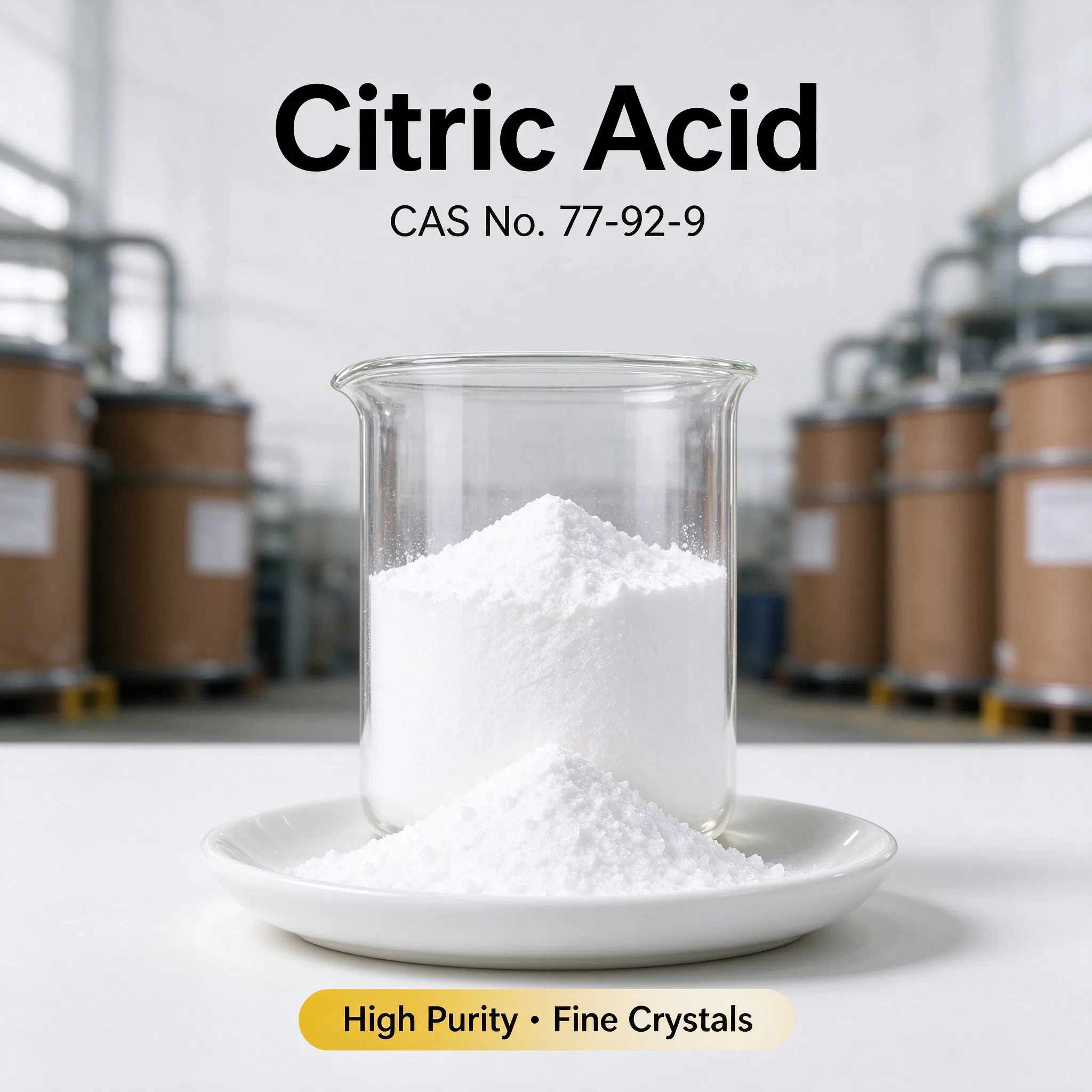
Overview of Citric Acid (CAS No. 77-92-9)
Introduction
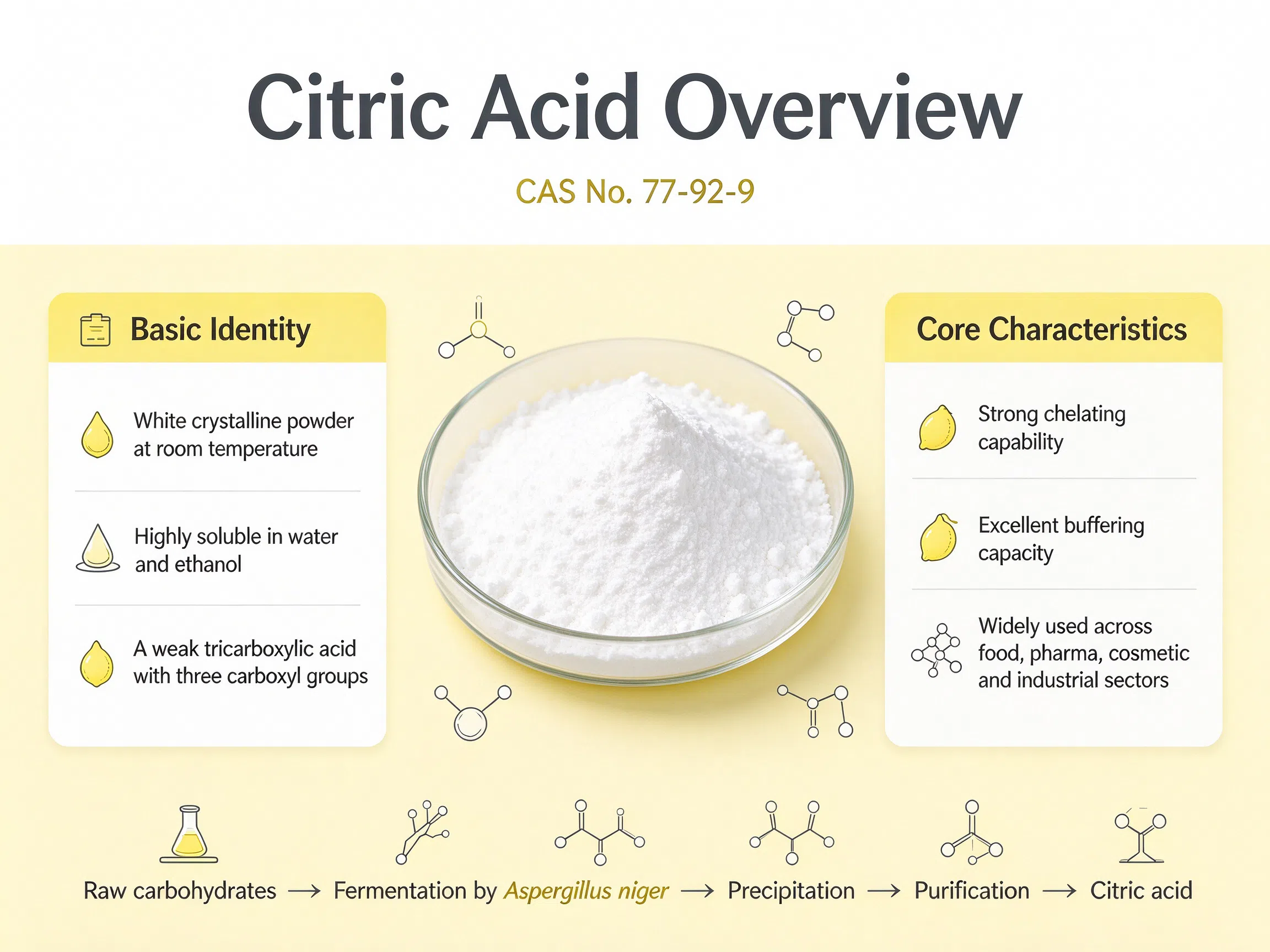
Citric acid (CAS No. 77-92-9) is a naturally occurring organic acid belonging to the tricarboxylic acid family. It appears as a white crystalline powder at room temperature and is highly soluble in water and ethanol. As one of the most widely used food additives and industrial chemicals, citric acid plays a vital role in food, pharmaceuticals, cosmetics, and industrial processing. This article provides an overview of the synthesis, properties, applications, and safety considerations of citric acid.
Synthesis
Citric acid is primarily produced through microbial fermentation, most commonly using the fungus Aspergillus niger. In this process, carbohydrates such as glucose or molasses are fermented under controlled conditions, and the resulting citric acid is precipitated and purified. The fermentation method is highly efficient and suitable for large-scale industrial production. Alternatively, citric acid can be chemically synthesized, though this route is less common due to higher costs and lower yields.
Properties and Applications
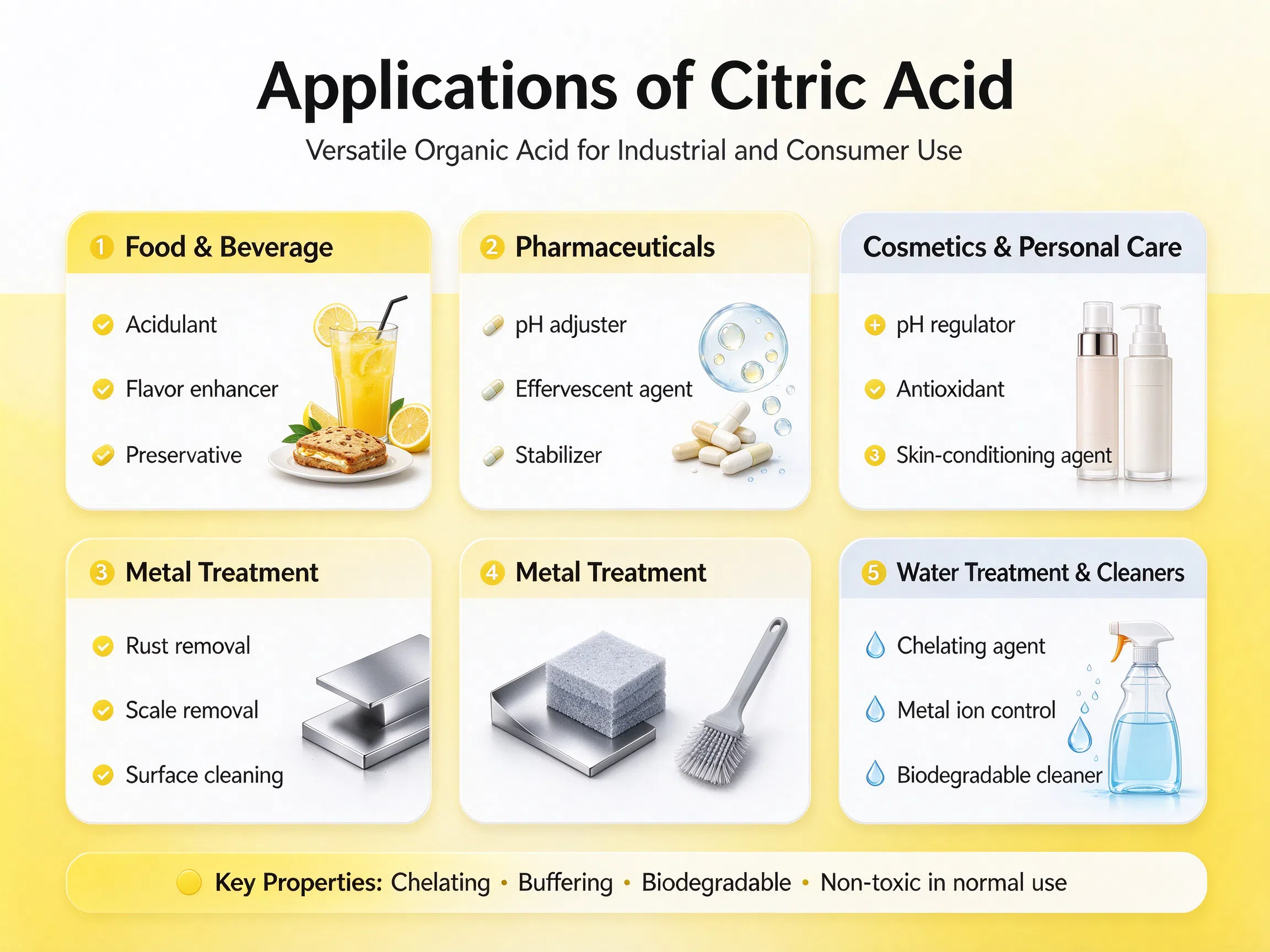
Citric acid is a weak tricarboxylic acid with three carboxyl groups, giving it strong chelating and buffering capabilities. It is widely used in the food industry as an acidulant, flavor enhancer, and preservative. In pharmaceuticals, it serves as a pH adjuster, effervescent agent, and stabilizer. In cosmetics and personal care products, it functions as a pH regulator and antioxidant.
Beyond these traditional uses, citric acid plays a key role in metal surface treatment, where it effectively removes rust and scale. It is also used in water treatment as a chelating agent to control scale and remove metal ions. Additionally, citric acid is employed in cleaning products, detergents, and eco-friendly industrial formulations due to its biodegradable and non-toxic nature.
Safety and Handling
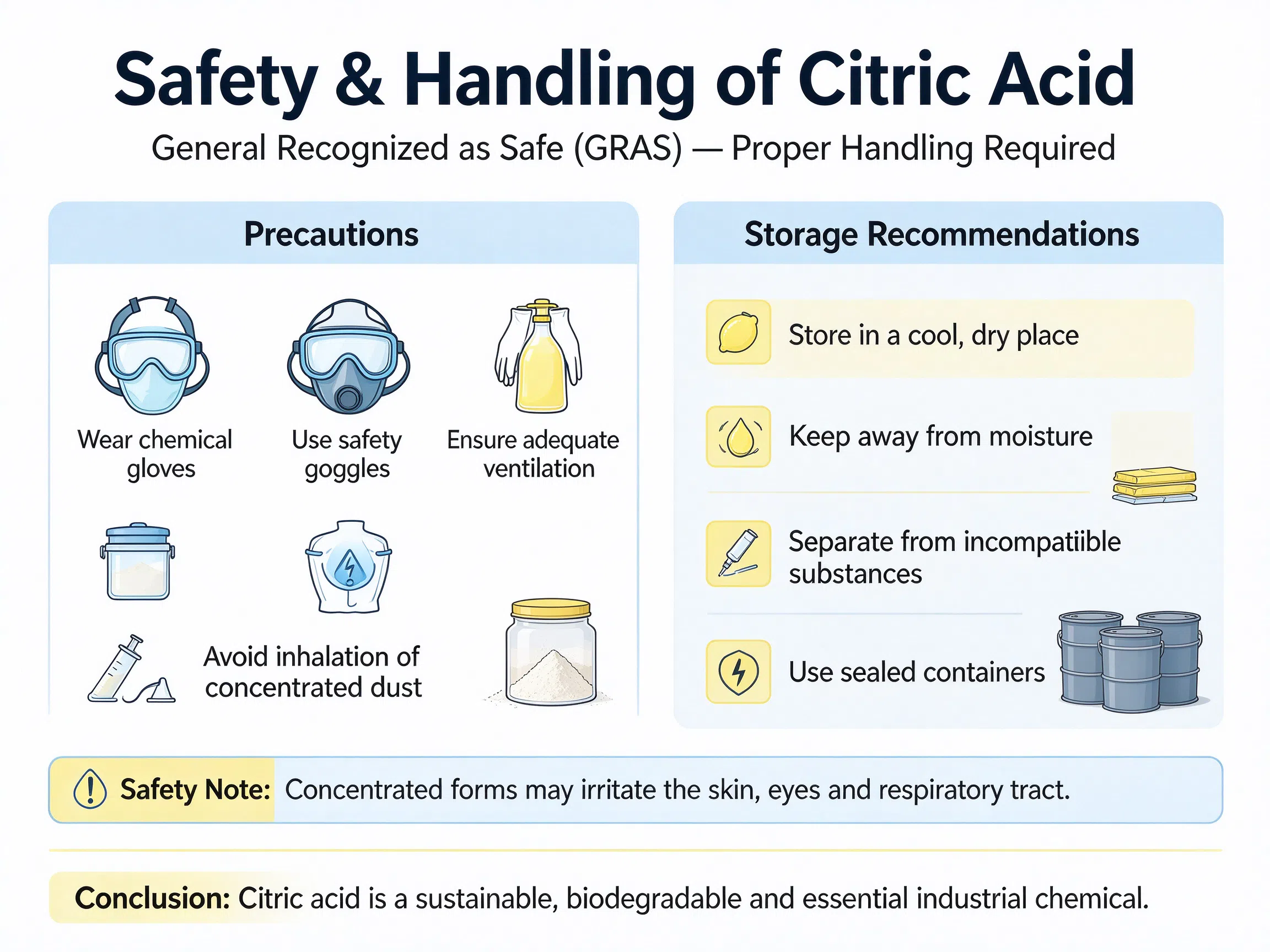
Citric acid is generally recognized as safe (GRAS) by the U.S. FDA and is approved for use in food and pharmaceutical products. However, in concentrated form, it may cause irritation to the skin, eyes, and respiratory tract. Appropriate safety precautions should be taken during handling, including the use of gloves, safety goggles, and adequate ventilation. It should be stored in a cool, dry place, away from moisture and incompatible substances.
Conclusion
Citric acid is a versatile organic acid with a broad range of applications across food, pharmaceuticals, cosmetics, and industrial sectors. Its natural origin, multifunctional properties, and environmentally friendly profile make it an essential ingredient in modern manufacturing. As demand for sustainable and biodegradable chemicals continues to grow, citric acid is expected to remain a key player in the global chemical market.
Product Information: Citric Acid CAS#77-92-9


